What You Are Seeing
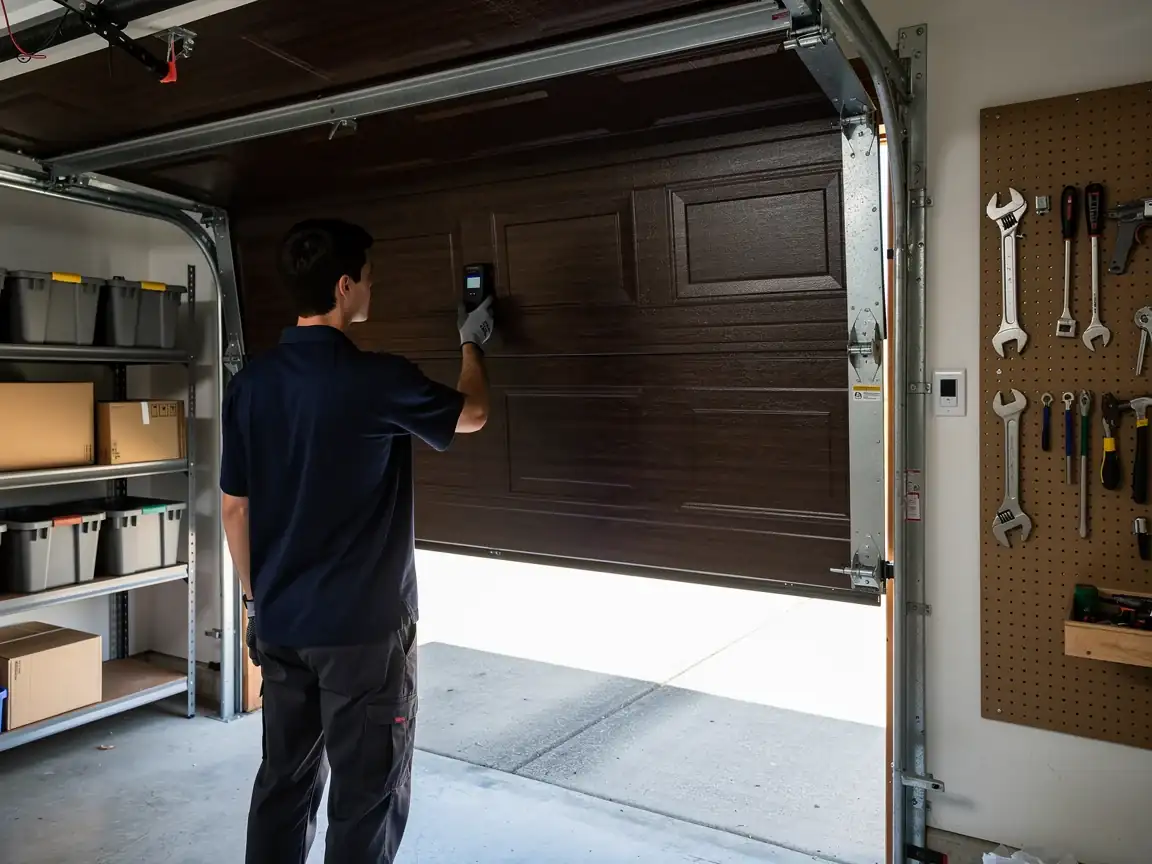
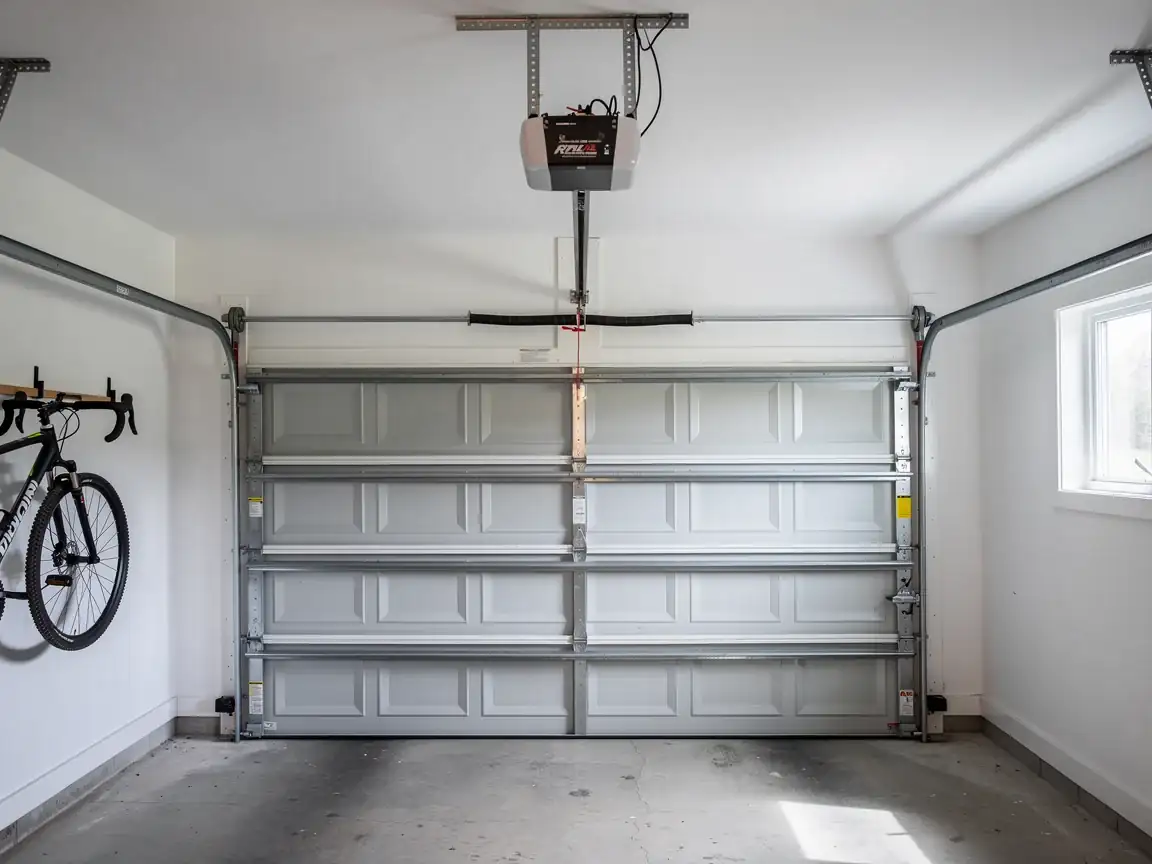
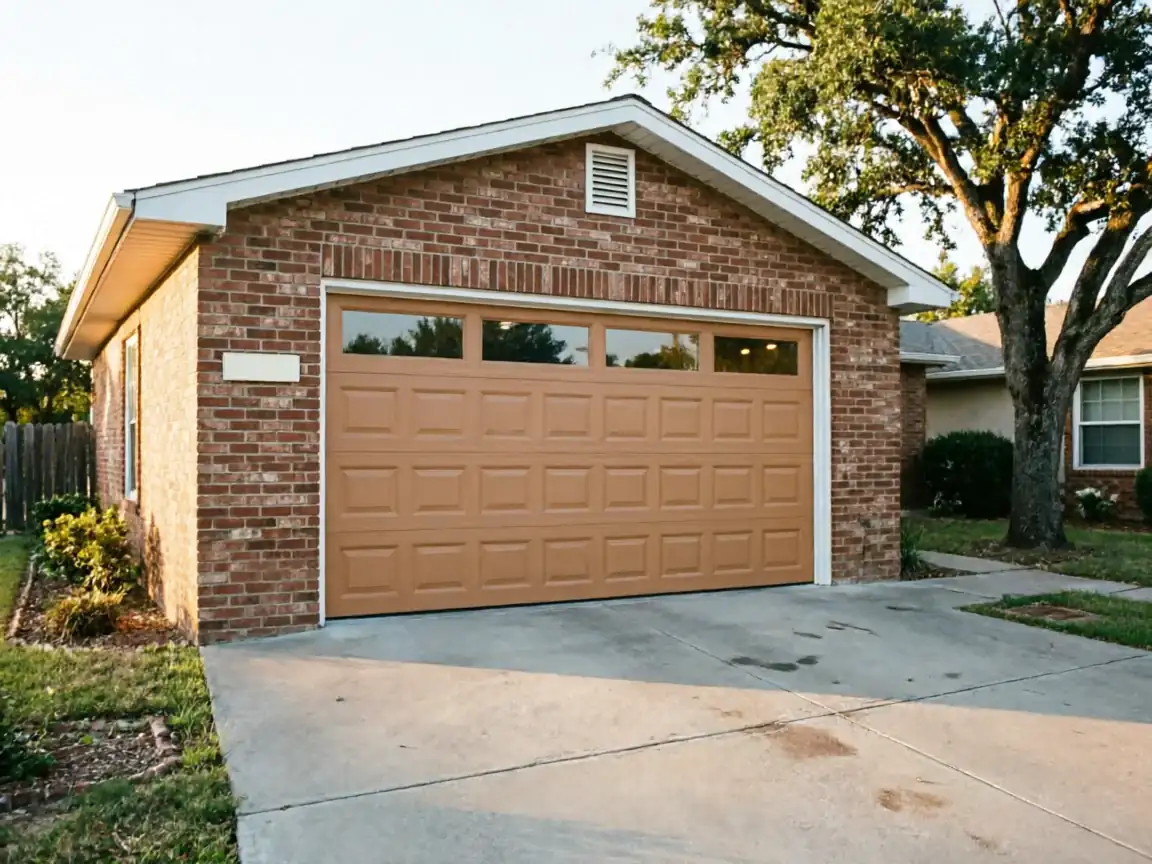
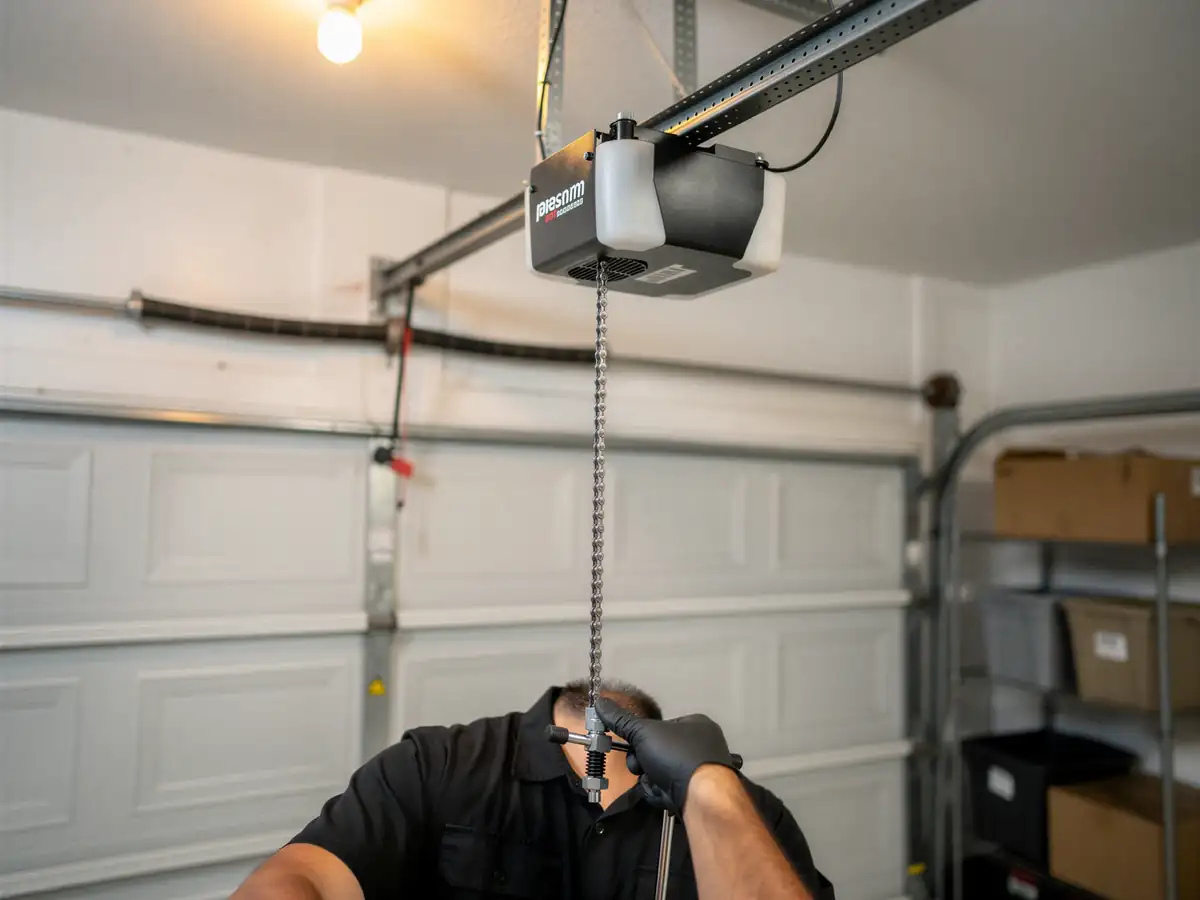
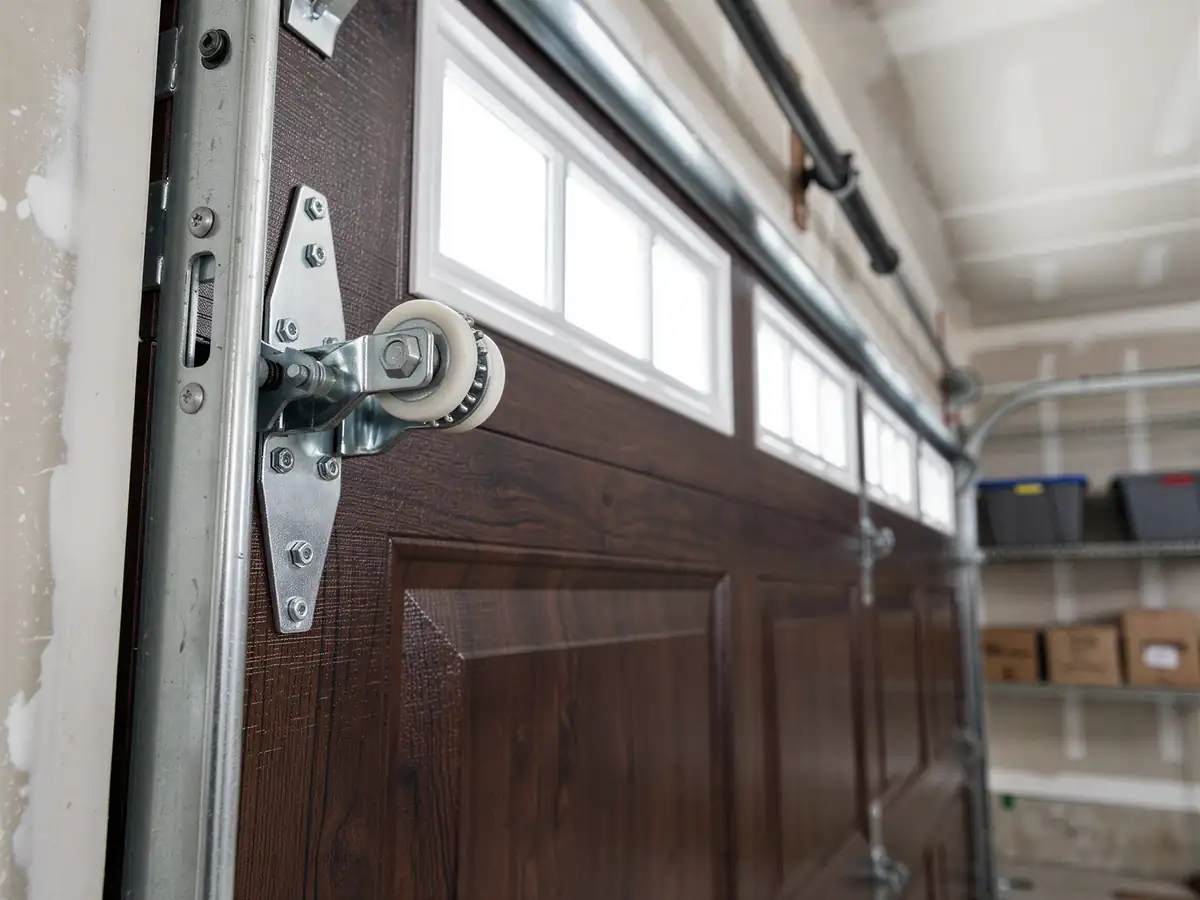
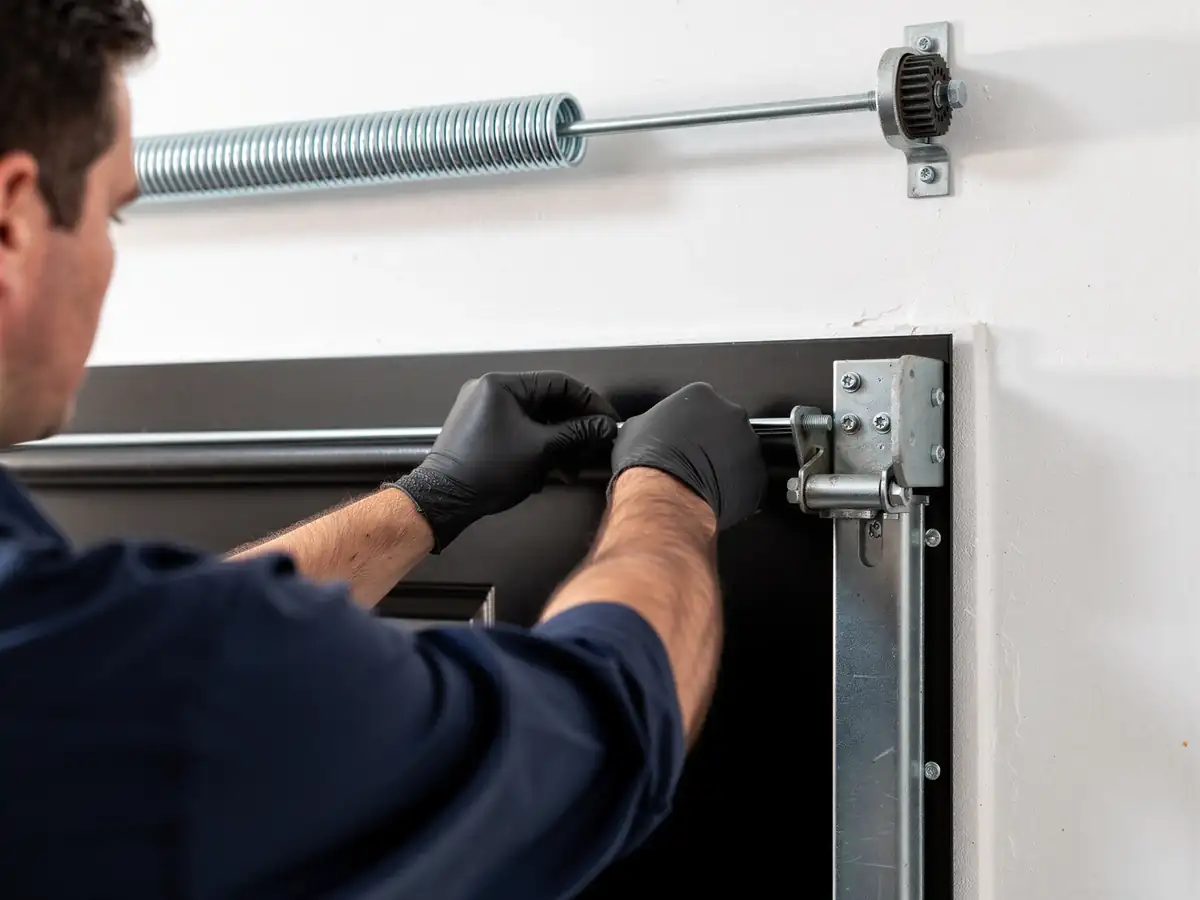
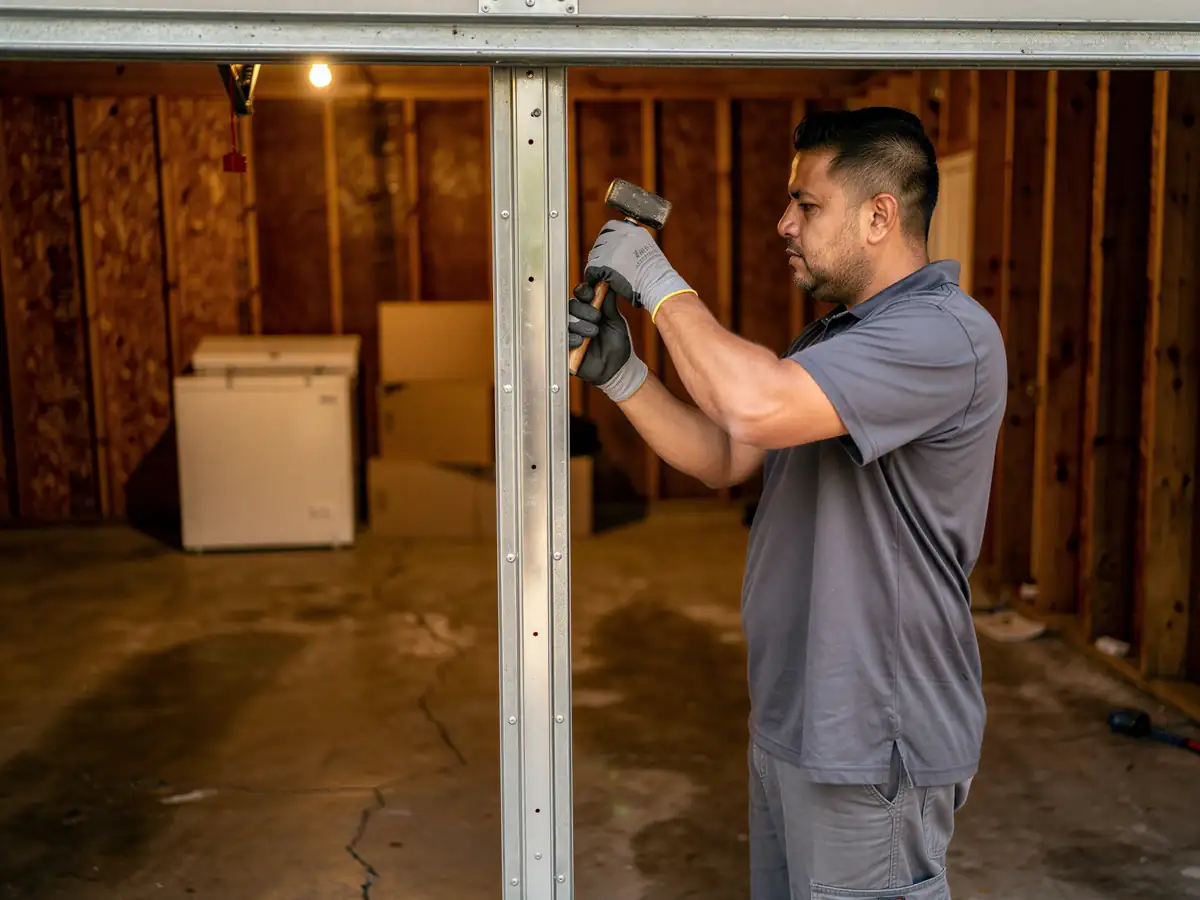
An off-track door usually shows itself one of three ways: the door hangs crooked in the opening, one bottom corner sits lower than the other, or the door simply stops moving partway and the opener strains against it. Sometimes you'll see the roller itself sitting outside the track rail, sometimes the track has been pulled away from the wall bracket entirely. On older sectional doors - and a lot of Skiatook's housing dates to the 1980s, with median year built around 1986 - the track brackets are original-spec and lighter gauge than what gets installed today, so a hard knock (a car bumper, a gust catching the door mid-cycle) bends the rail instead of just popping the roller loose. If the opener is still trying to run the door after it's off track, stop it. Running a motor against a jammed door strips gears or burns out the opener, and turns a track repair into a track-plus-opener repair.
Why This Fails Locally
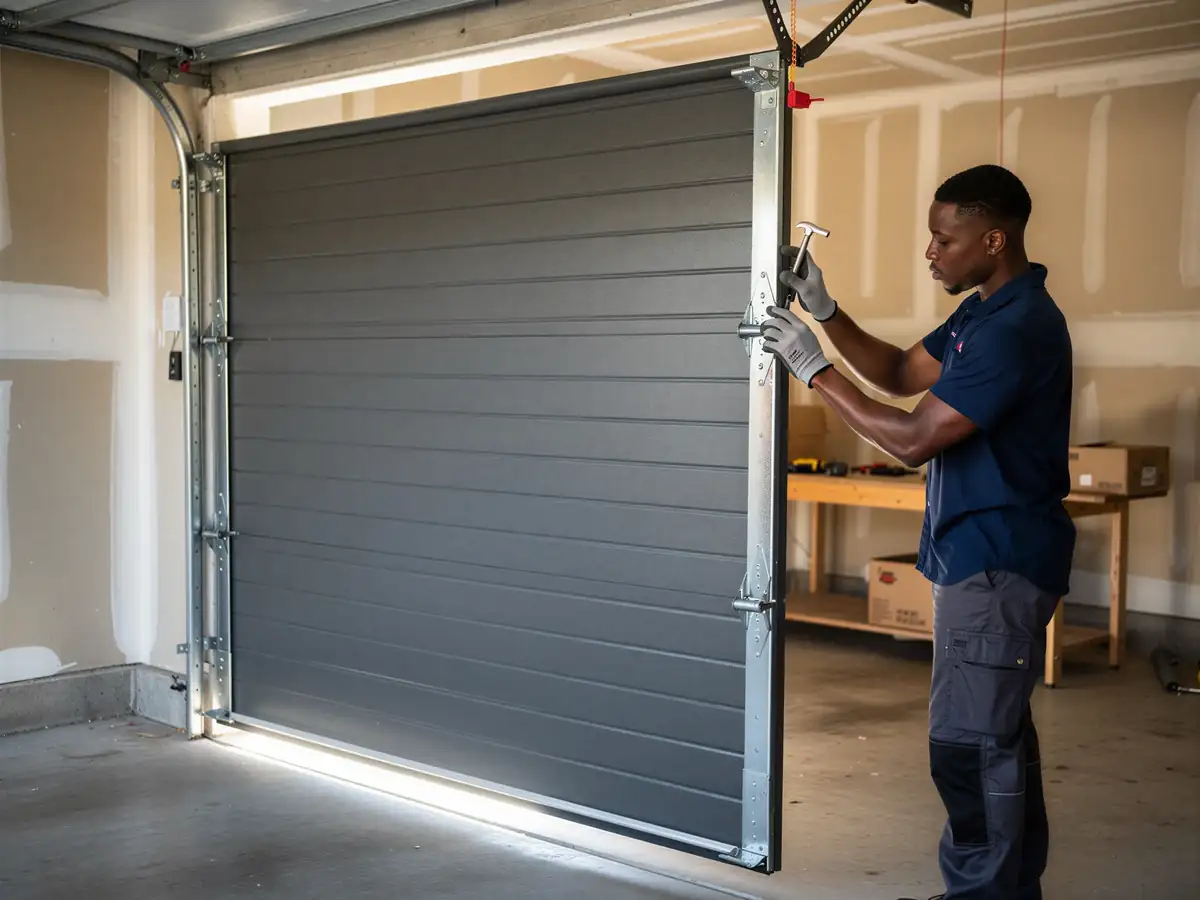
A door built around the mid-1980s - which covers a large share of Skiatook houses given that median build year - runs on track and roller hardware that's thinner-walled than current product. Thirty-plus years of cold-season expansion and contraction loosens the lag screws holding the track brackets to the jamb, so the track has a little play in it even before anything knocks it loose. Add a winter freeze-thaw cycle, which this area gets as part of a cold-moderate climate band, and the wood behind those brackets can shrink just enough that a screw that held fine in August backs out by February. That's a different failure path than a newer door with lag shields and steel-reinforced jambs sees. It's also why a repair here often includes re-anchoring the bracket, not just rehanging the door - skip that step and the same door comes off track again within a season.
Can You Do This Yourself
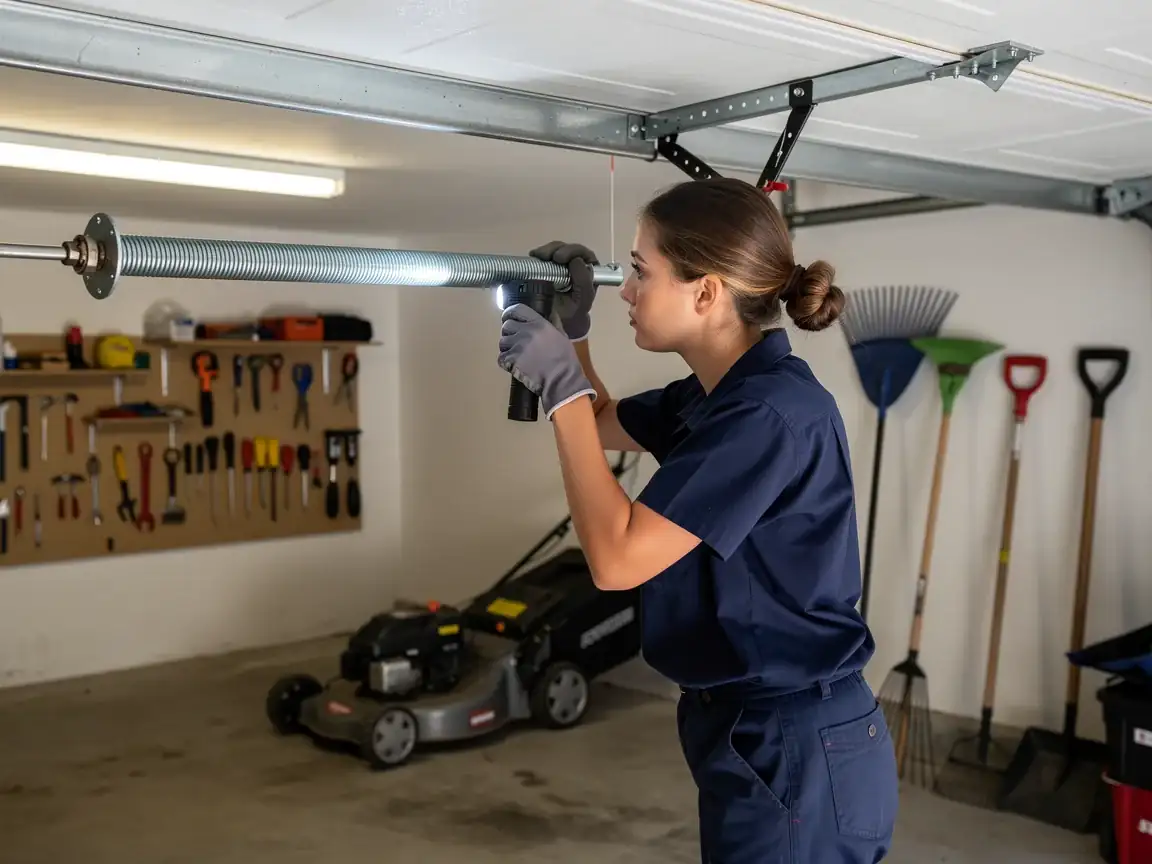
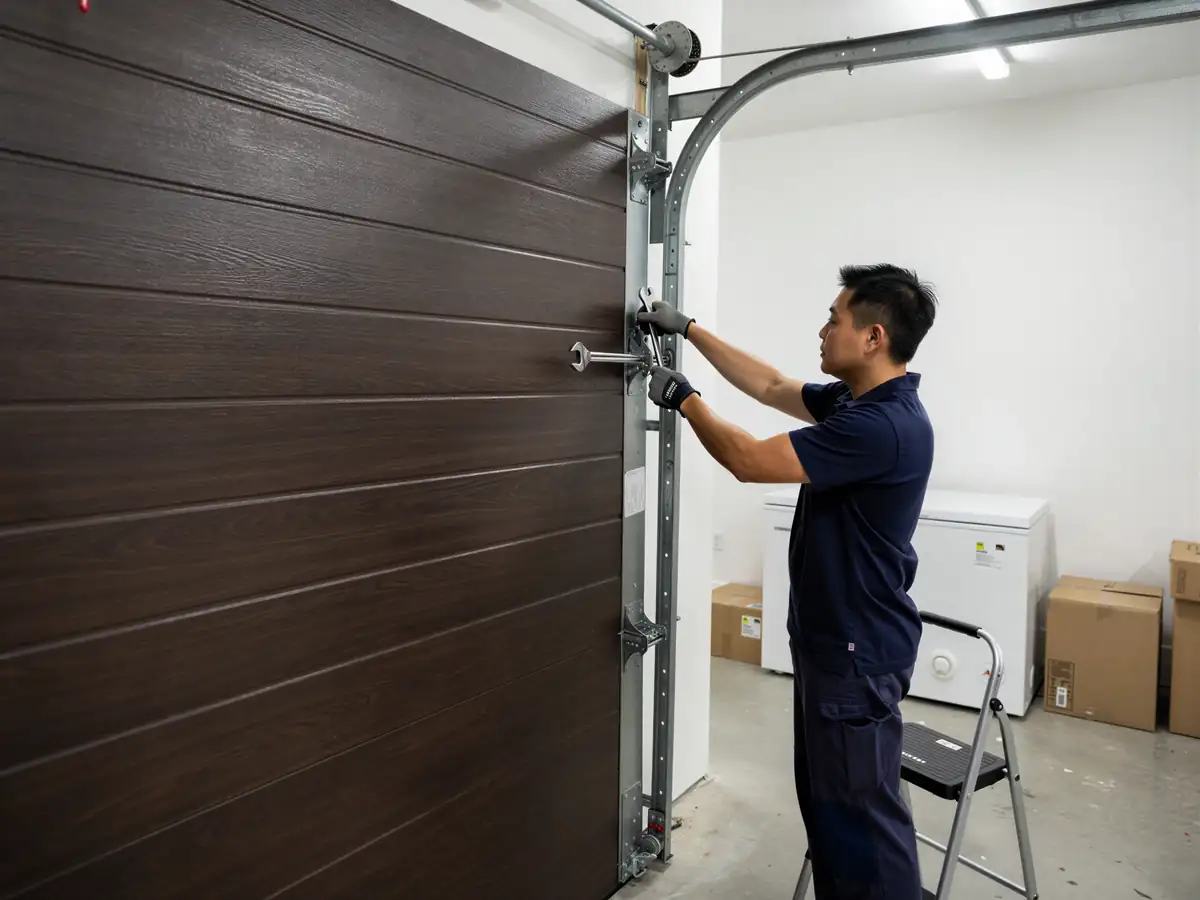
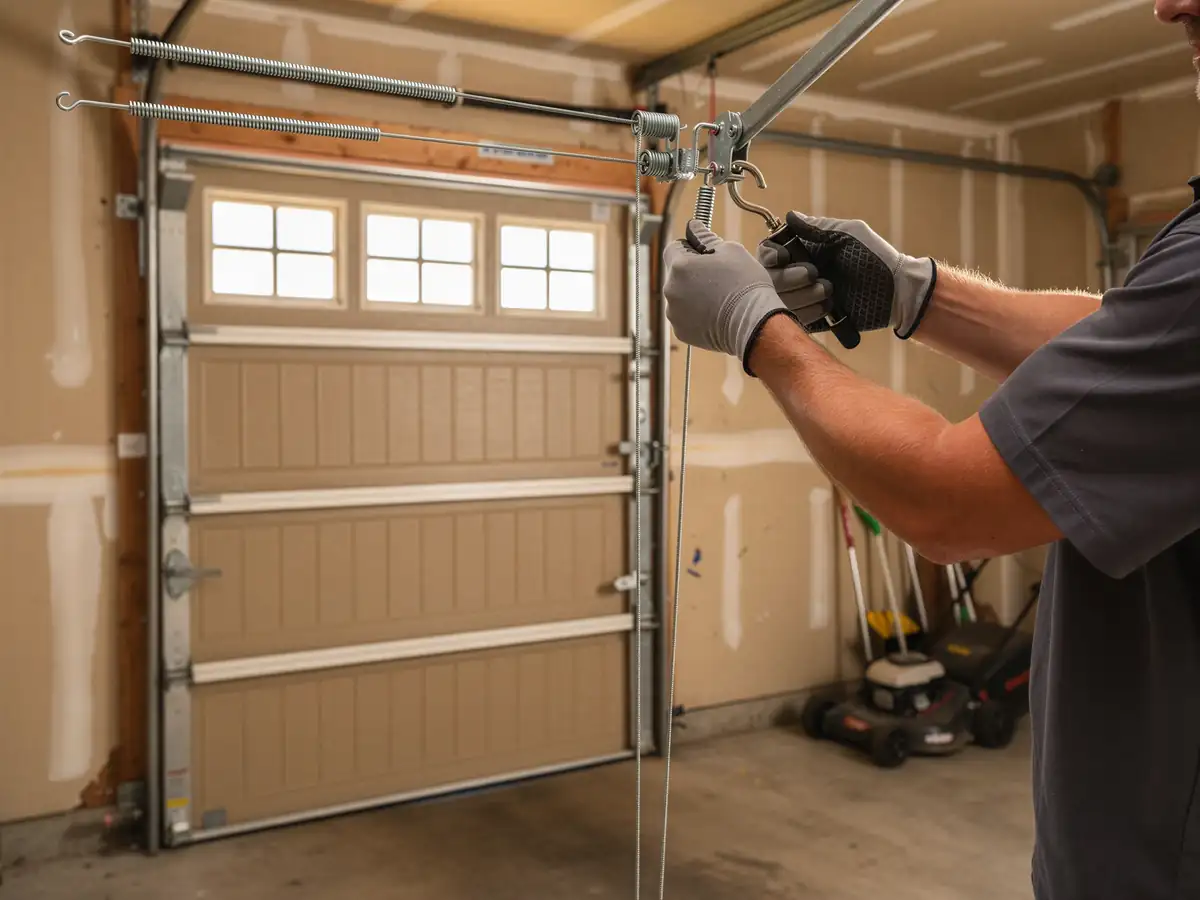
If the door is only slightly off - one roller has popped free but the track itself looks straight - you can sometimes walk the door back onto the track by hand with the opener disconnected. Do not attempt this with the opener still engaged, and do not attempt it at all if a spring or cable is involved; a loaded torsion spring under tension has enough force to cause serious injury. If the track itself is bent or the bracket has pulled away from the frame, that's not a homeowner fix - bending it back rarely restores the original alignment, and a track that's slightly off true will keep throwing rollers. At that point it's cheaper, in both money and time, to have it reset or replaced properly than to keep nudging it back into place every few weeks.
Parts We Carry
For Skiatook calls we carry standard track sections, nylon and steel rollers, roller carriers, and cable in the sizes that match the 1980s-to-2000s build range common across the area. What we don't always carry is an exact match for some original 1986-era roller carriers that newer track hardware wasn't designed to pair with - when we hit one of those, we'll tell you on site rather than force a mismatched fit, and we'll be straight about what a replacement section costs versus patching the original.