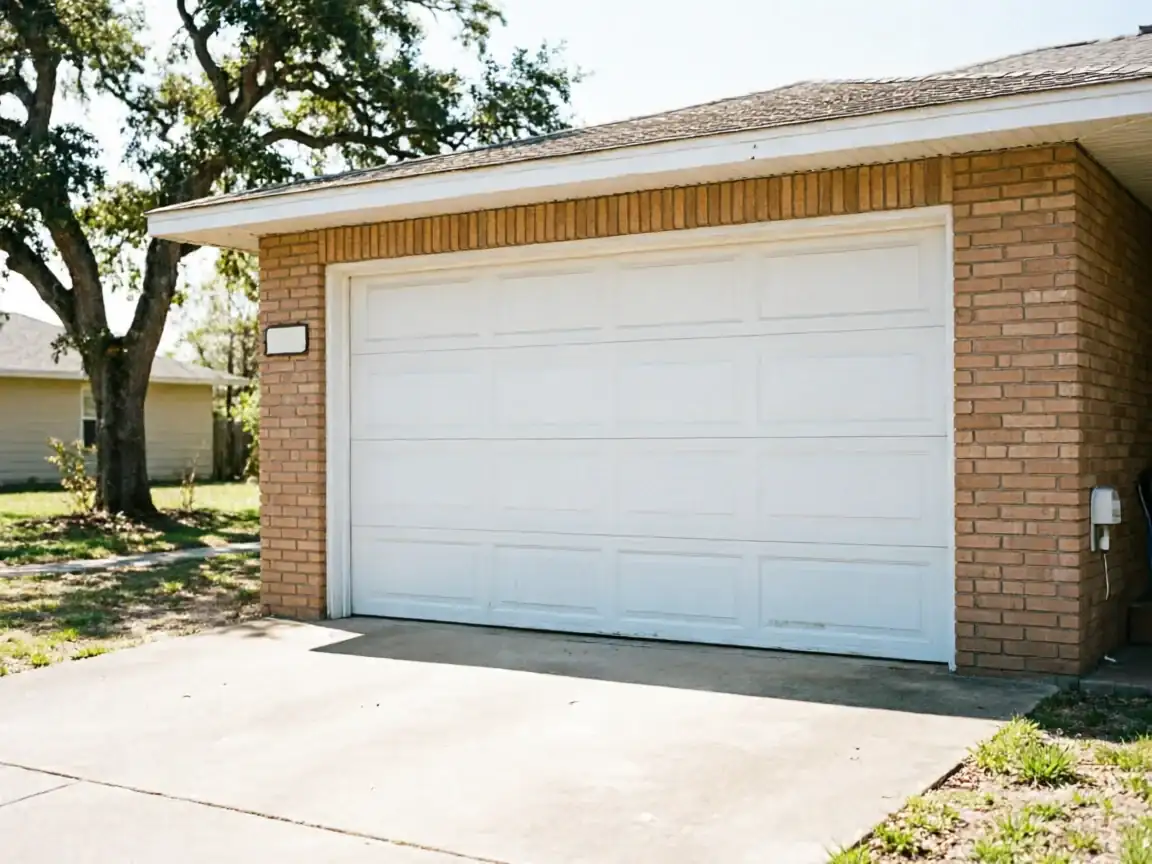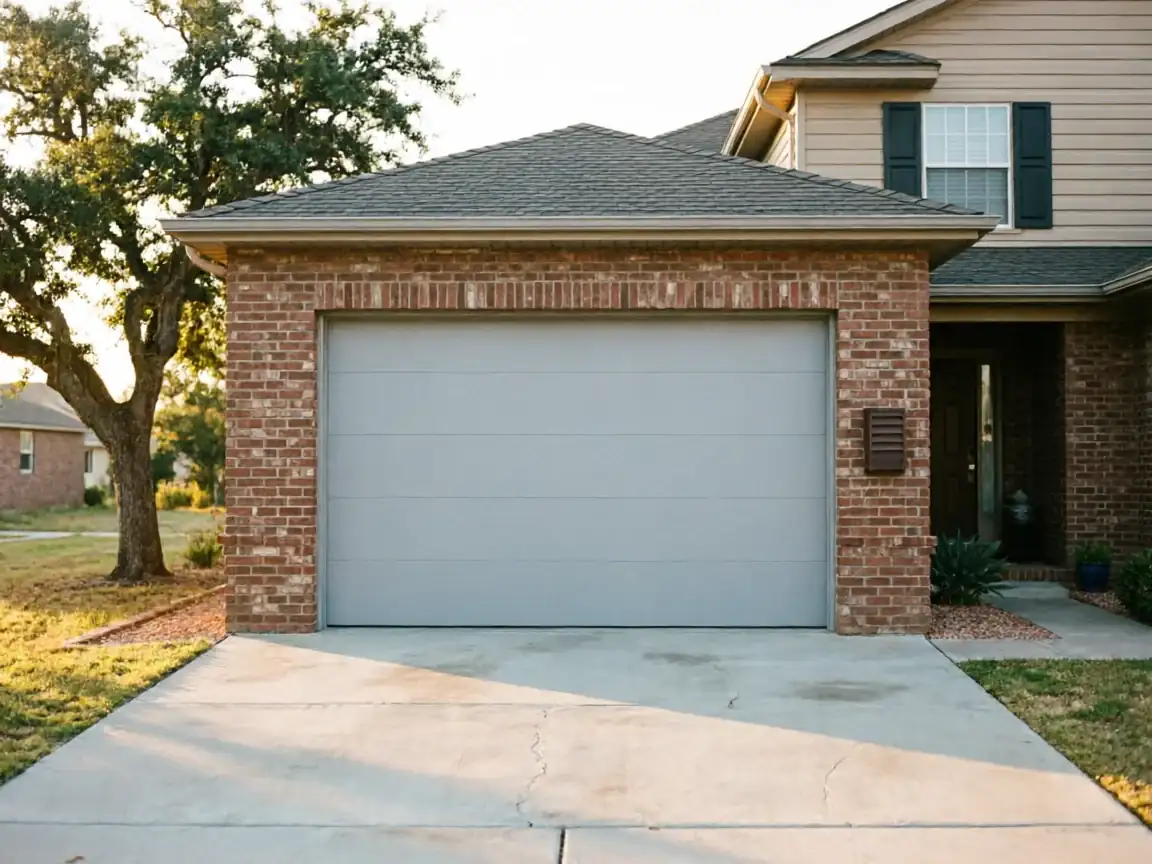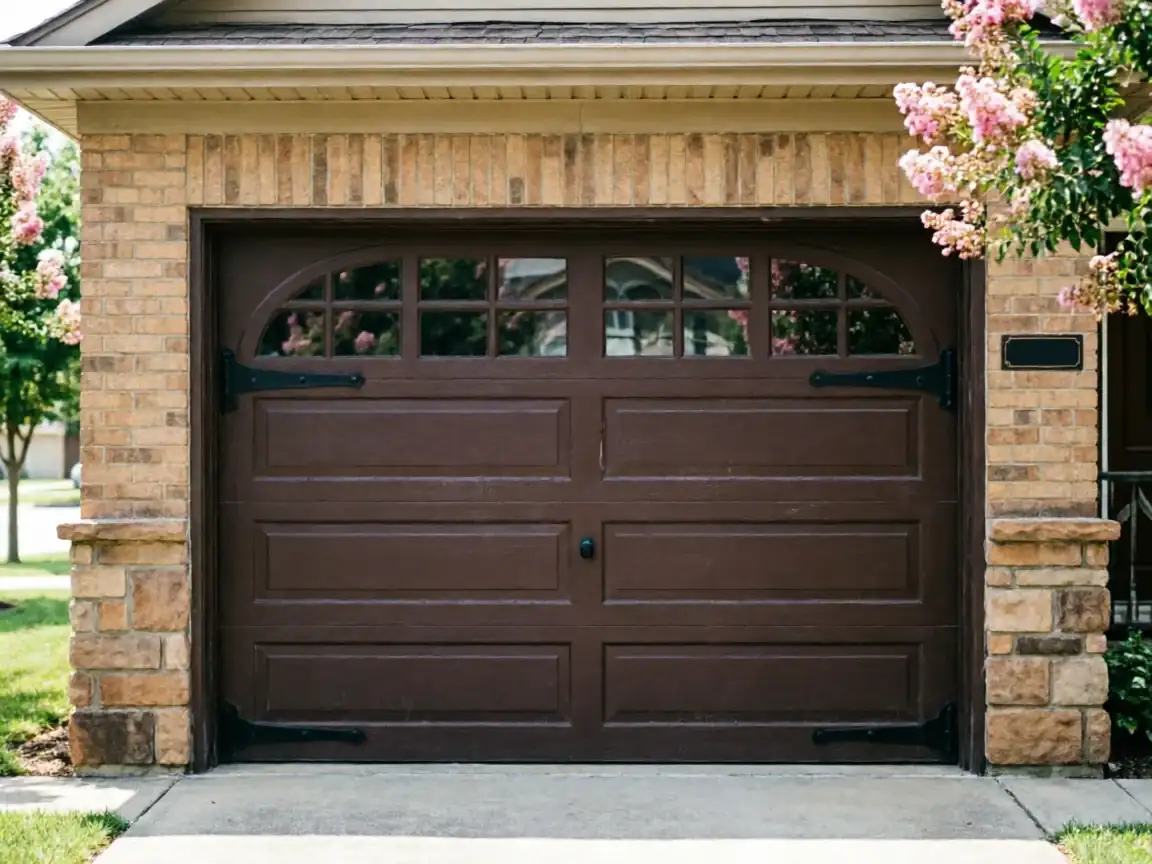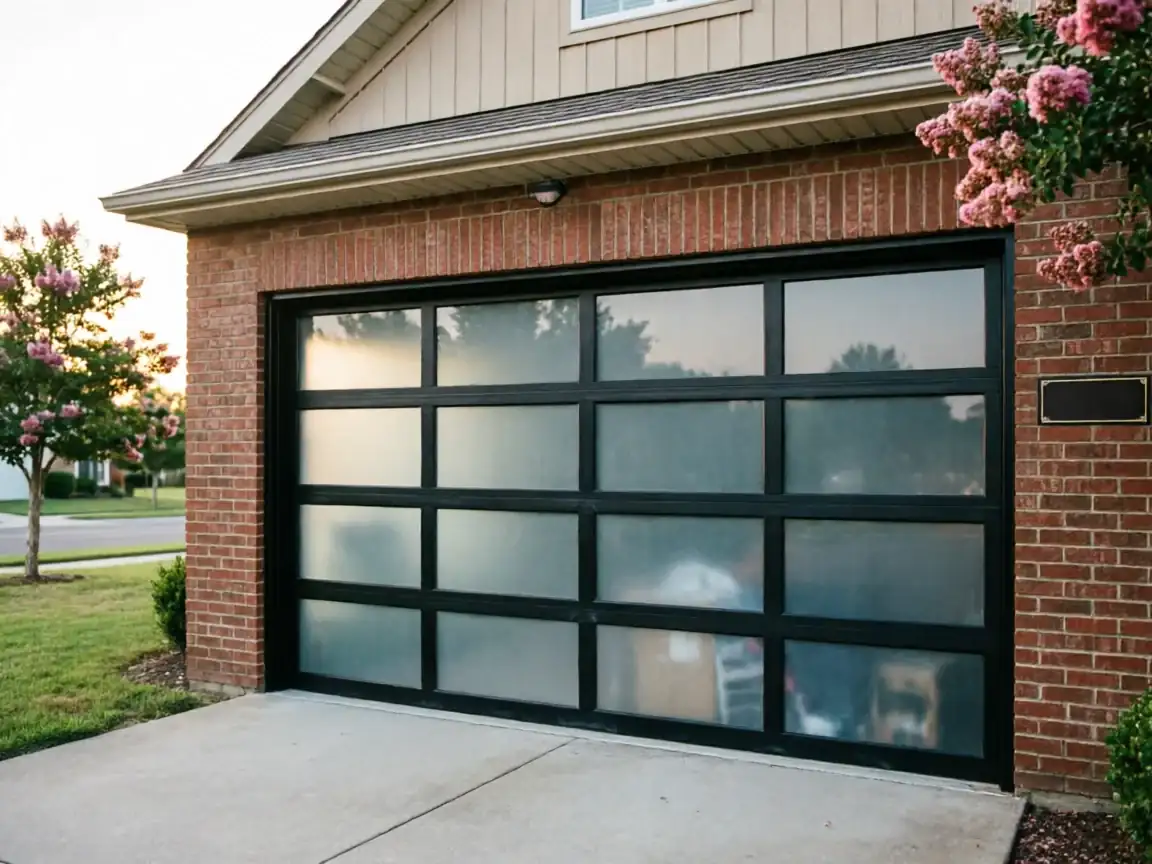
What You Are Seeing
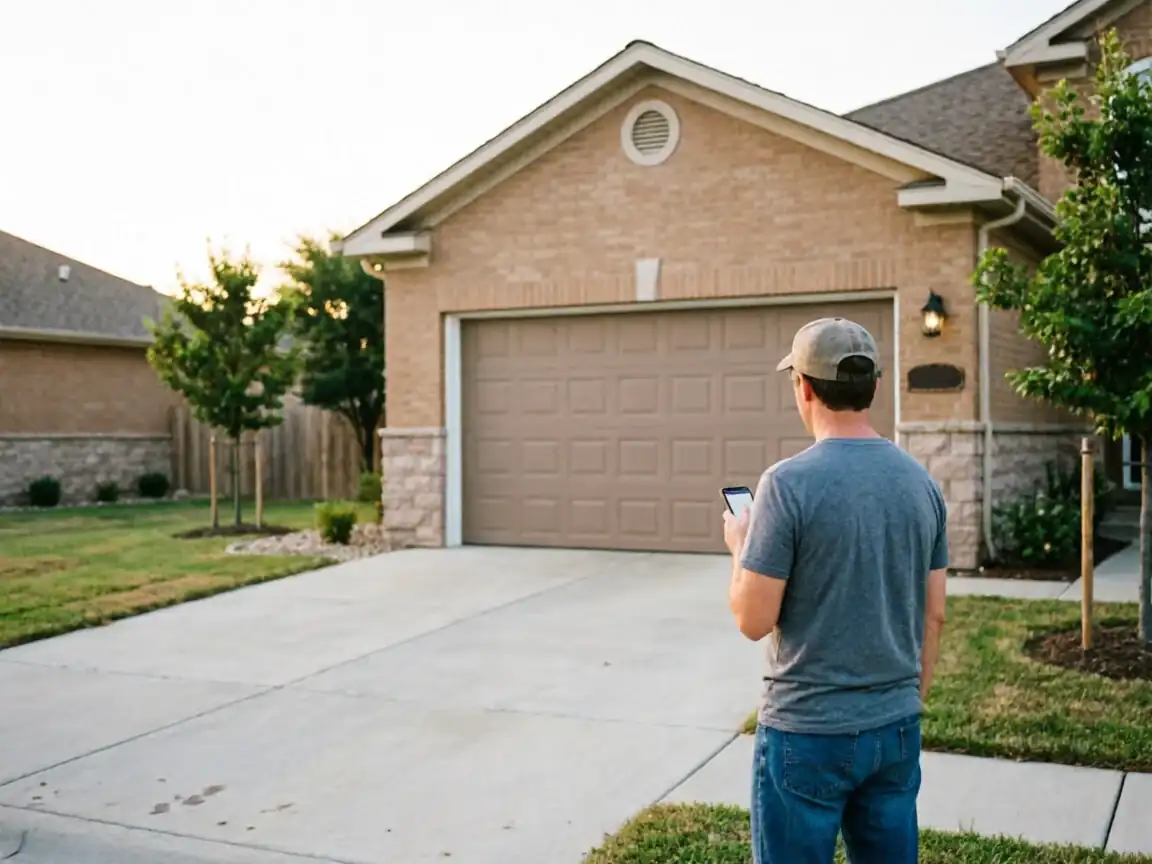
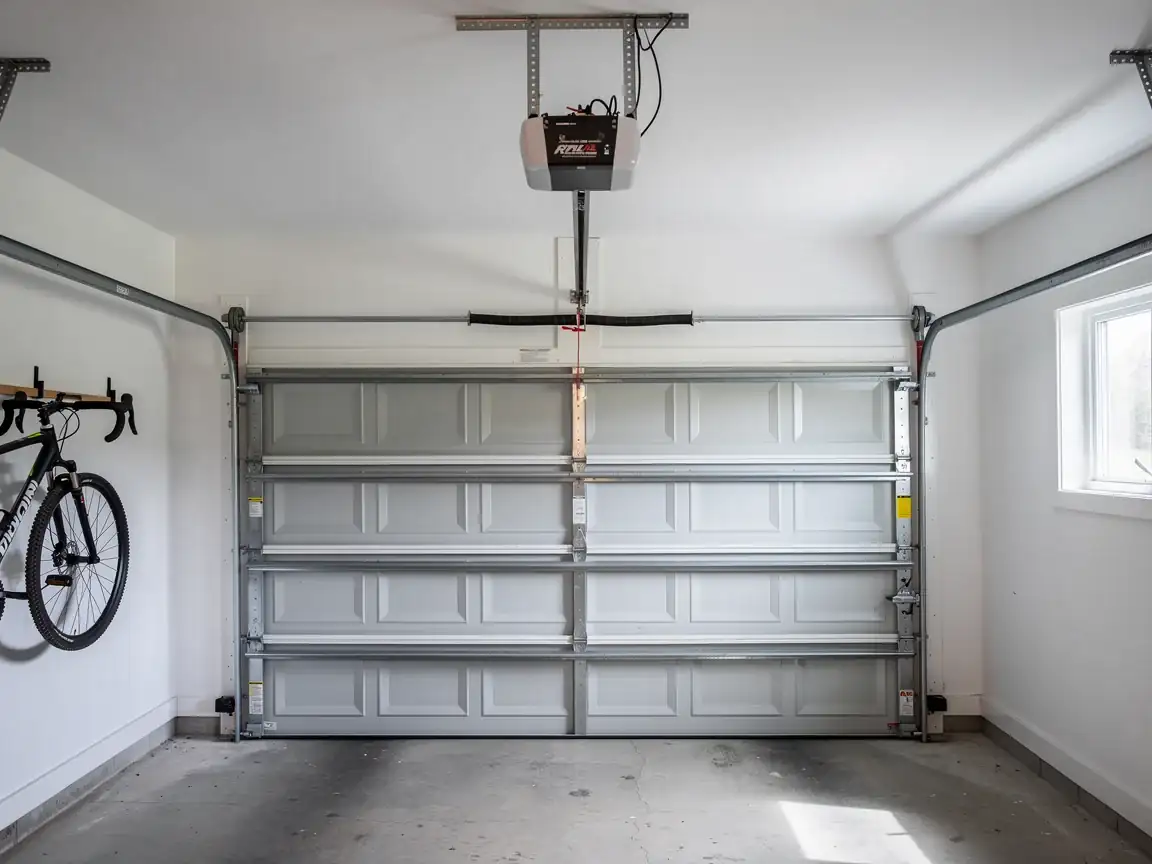
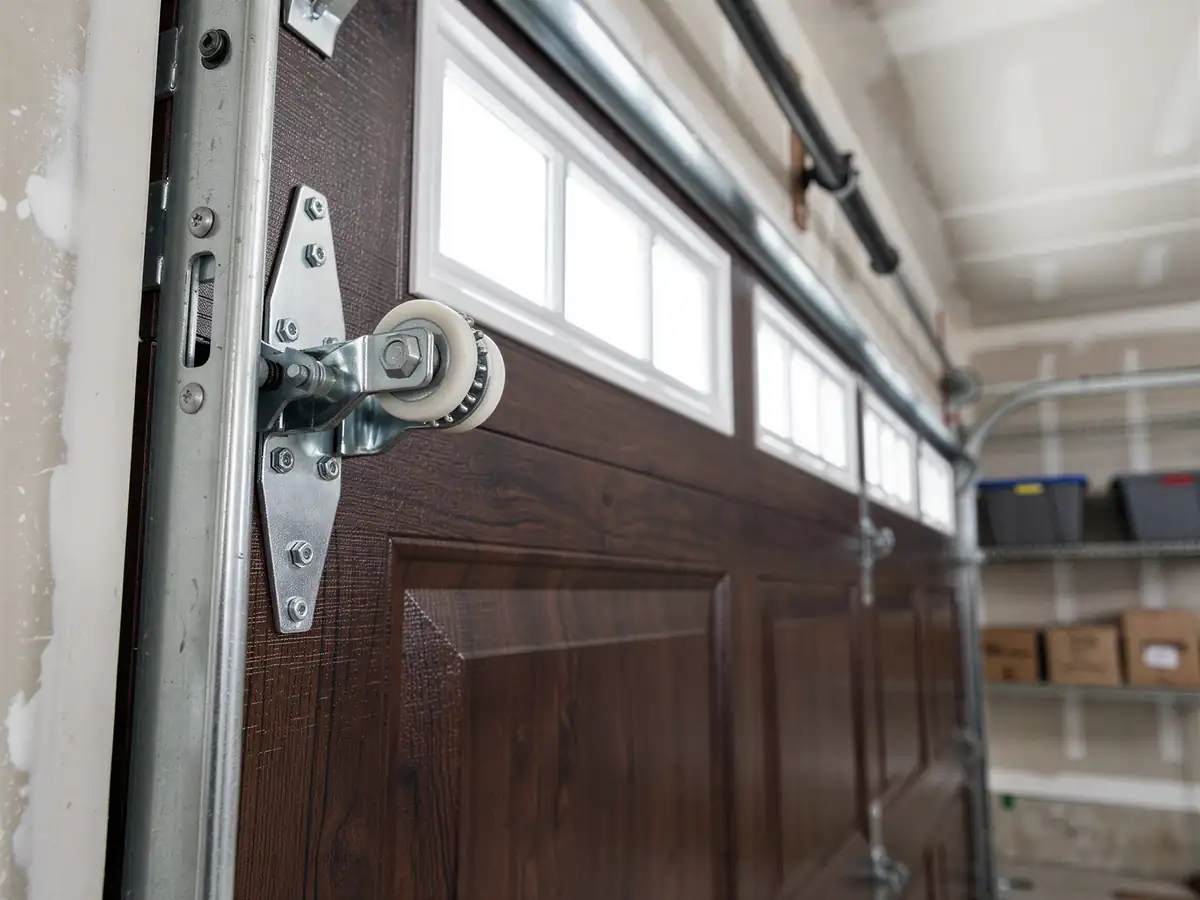
A door that's off track usually shows itself one of two ways
It stops mid-motion and won't budge, or it runs crooked, with one side dropping lower than the other before it binds against the frame. Sometimes you'll hear a bang before it happens - a roller popping out of the track, or a cable going slack and letting the panel lean. Other times it's gradual. The door starts rubbing against the track wall on one trip, then catches harder the next, until one morning it just won't move at all.
Across the Owasso service area
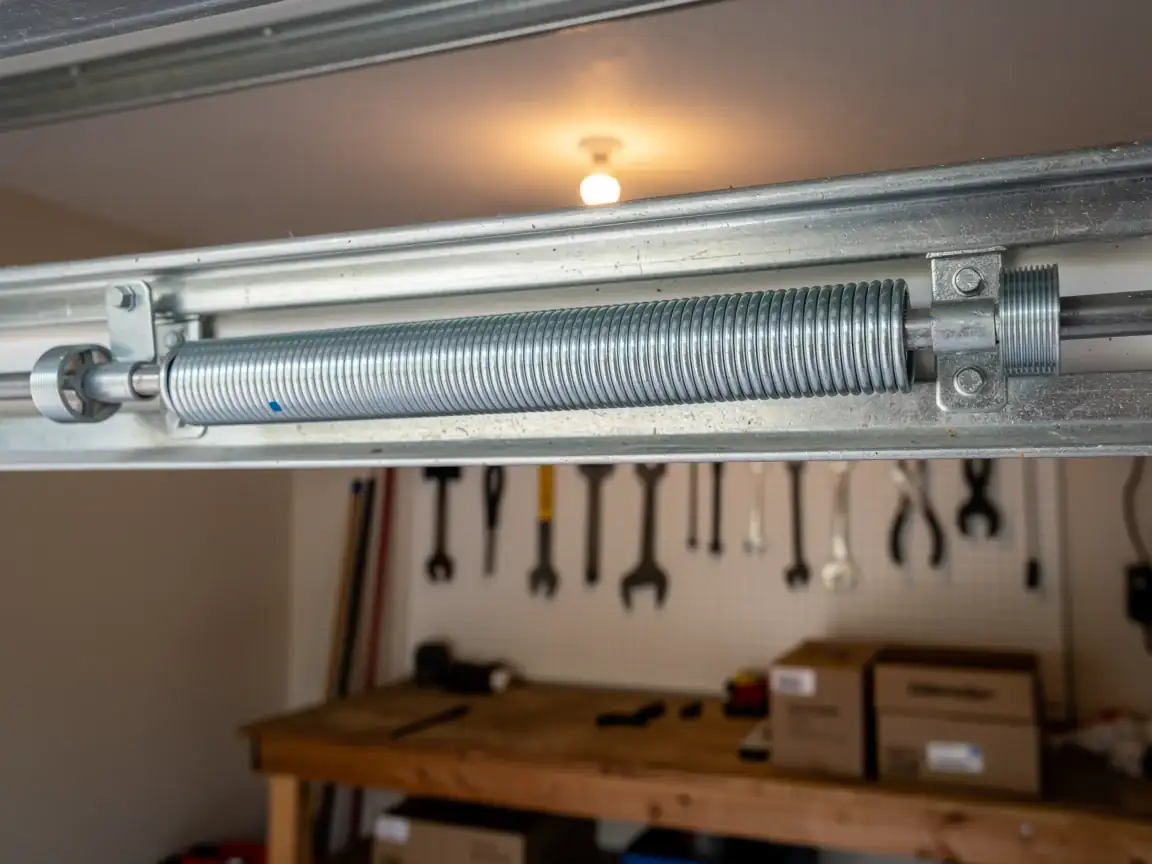
With roughly 16,948 owner-occupied houses out of 29,977 households, this is one of the calls we get most, and it's rarely random. The track itself is almost never the real problem. It's usually a bent roller, a worn cable, a spring that's lost tension unevenly, or a track bracket that's worked loose from the framing over years of use. Pushing the door up by hand or forcing the opener through it almost always turns a bent roller into a bent track, which turns a $100 problem into a full track replacement.
- 16,948 owner-occupied
- 29,977 households
Why This Fails Locally
Most of the housing across this area went up between 1965 and 2005, with the median build year landing around 1986, and the bulk of the stock across the 14 communities we cover dates to the 1980s and 90s. That matters here specifically because garage hardware from that build era - steel rollers, galvanized tracks, torsion springs sized for lighter sectional doors - is now 30 to 40 years old in a lot of these houses, even where the door itself has been swapped out once already. Track brackets anchored into original framing loosen with age, and that slack is exactly what lets a door walk off its rails.
The climate here is the other half of it. This is a cold-moderate band, which means the garage swings through real freeze-thaw cycles every winter rather than staying mild year-round. Metal track contracts in cold spells and expands again, and over enough seasons that movement works screws and lag bolts loose at the bracket. A track that was dead straight in October can be a hair out of alignment by February, and a hair is all it takes for a roller to jump the rail on a fast close.
What the Fix Involves
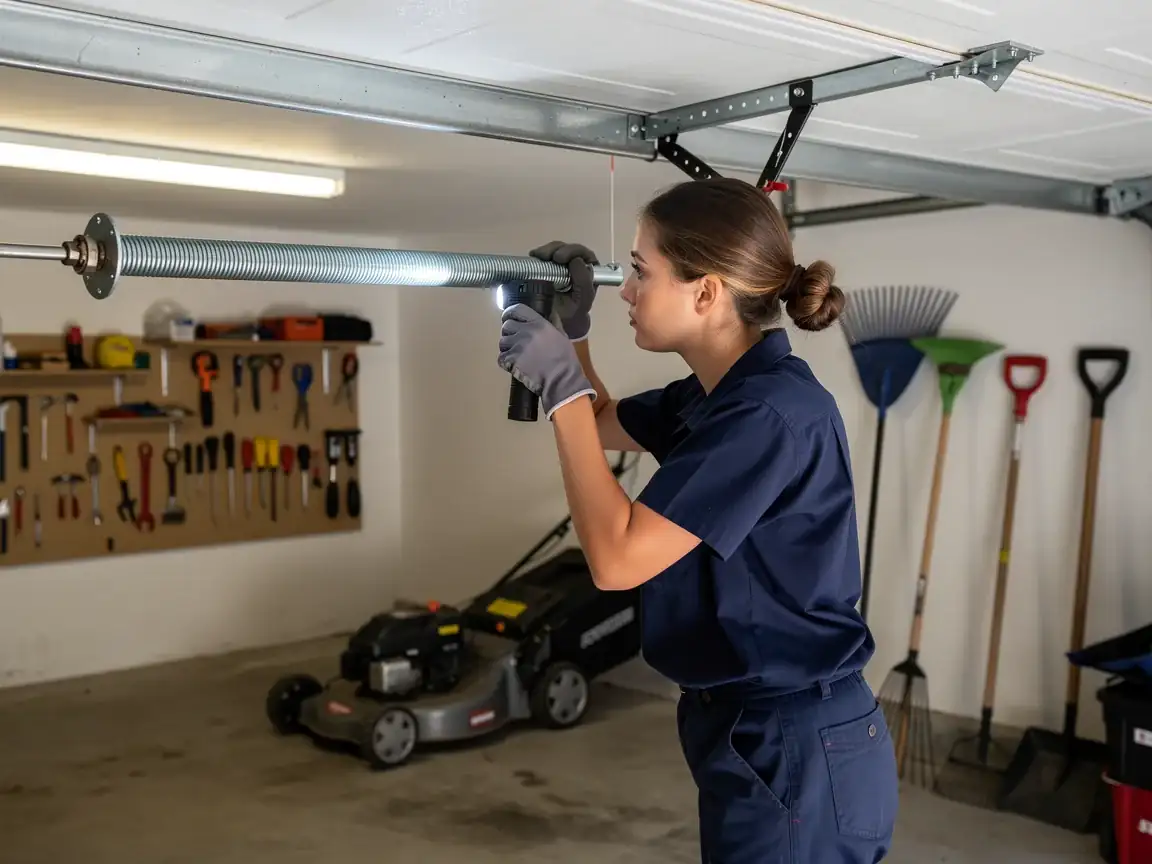
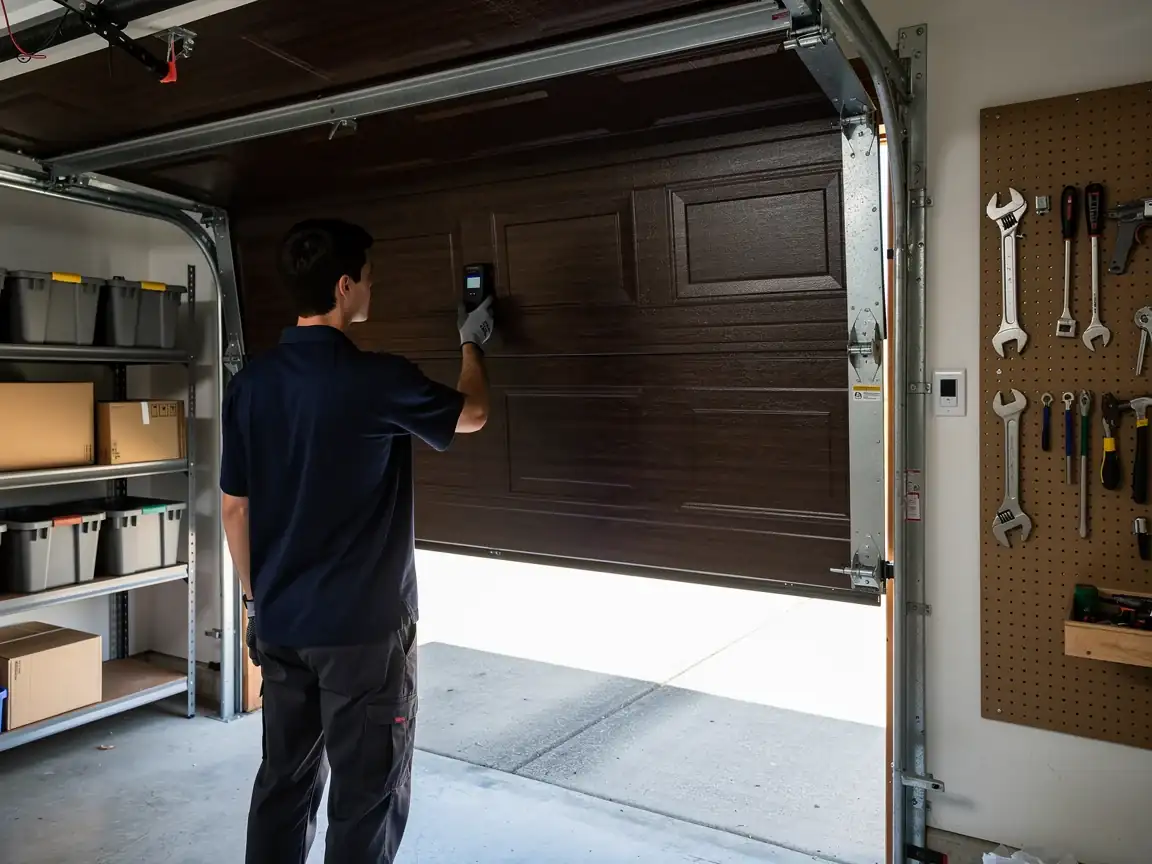
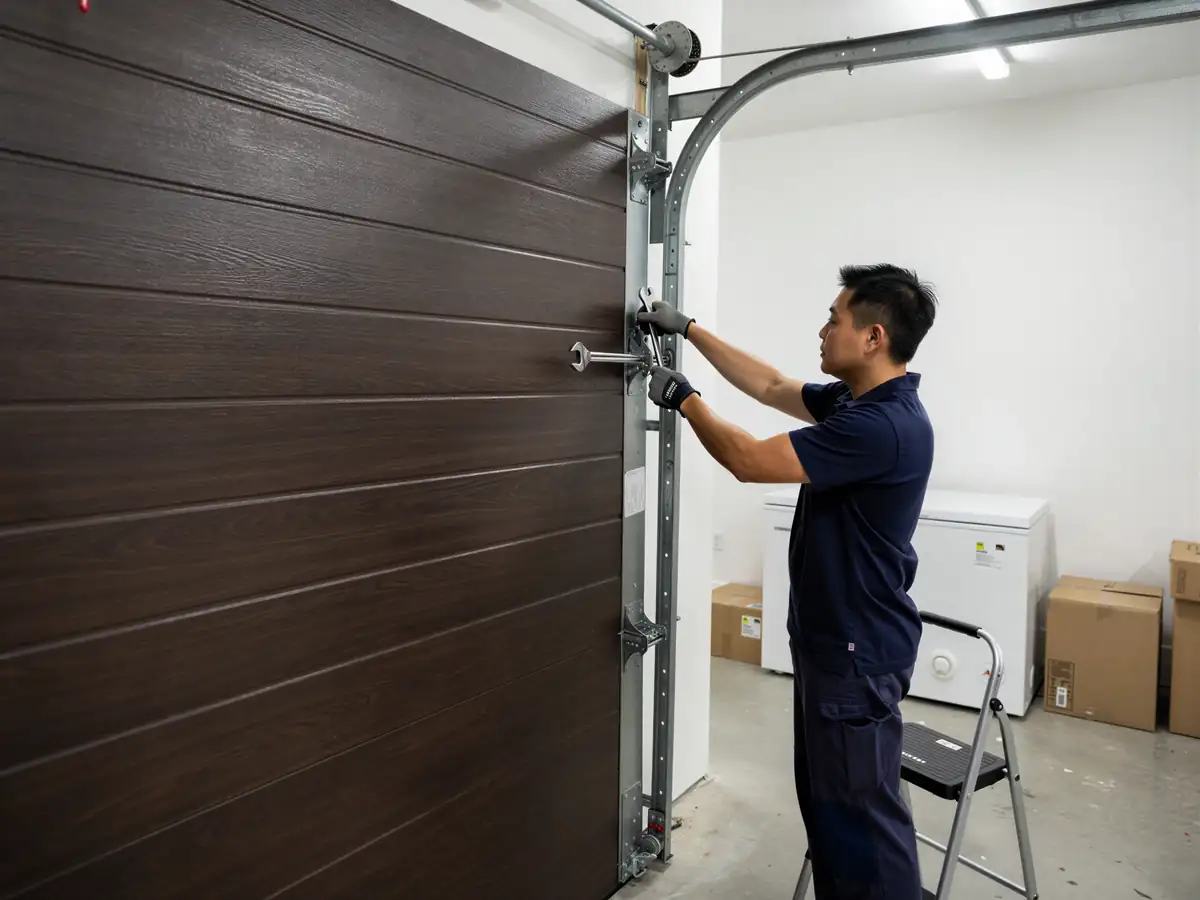
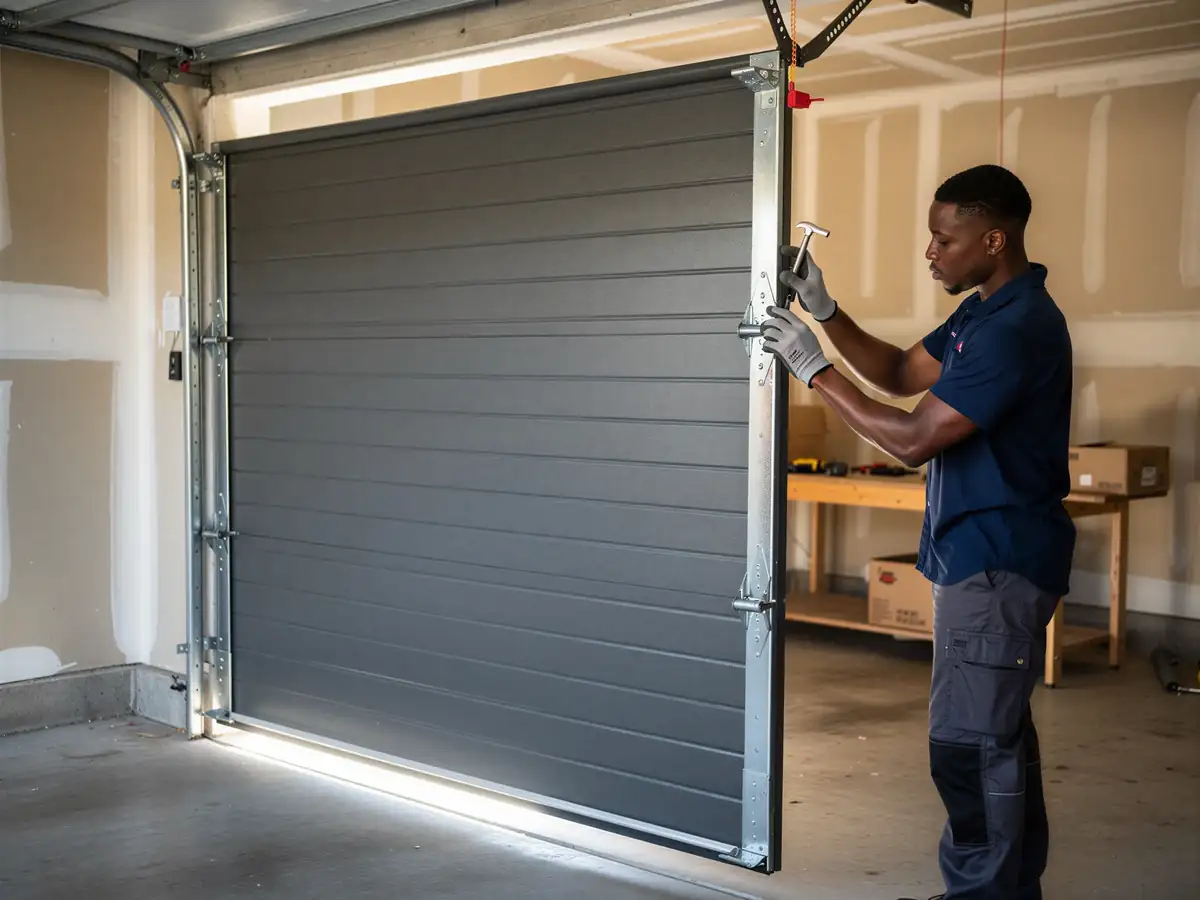
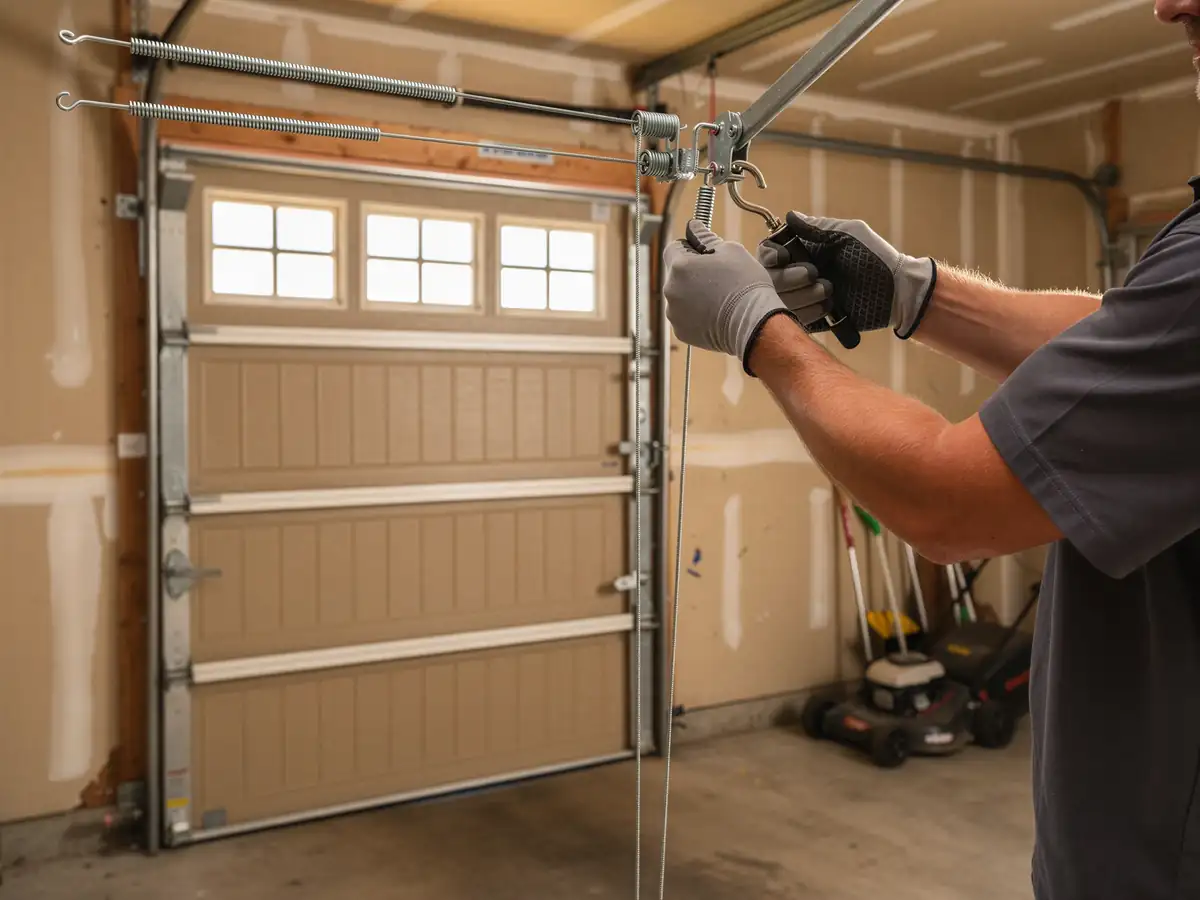
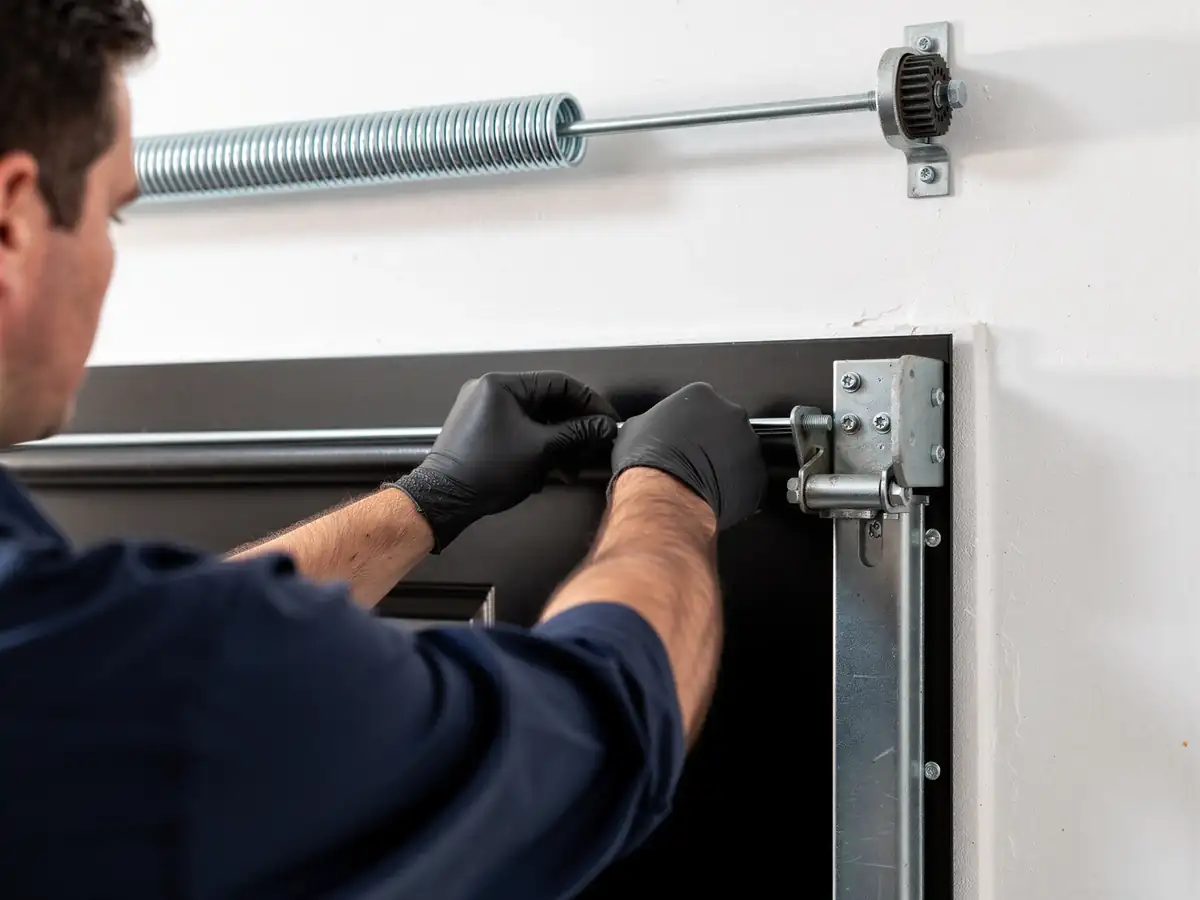
First step on any off-track call is figuring out whether the door came off because of one failed part or because the whole alignment has drifted. We check the rollers for flat spots or cracked bearings, look at the track for bends or separated sections, and check whether the brackets are still tight to the framing. If it's a single bent section or a couple of worn rollers, that's a straightforward repair - remove the door panel from the track, straighten or swap the damaged section, re-set the rollers, and re-tension if the spring side was affected.
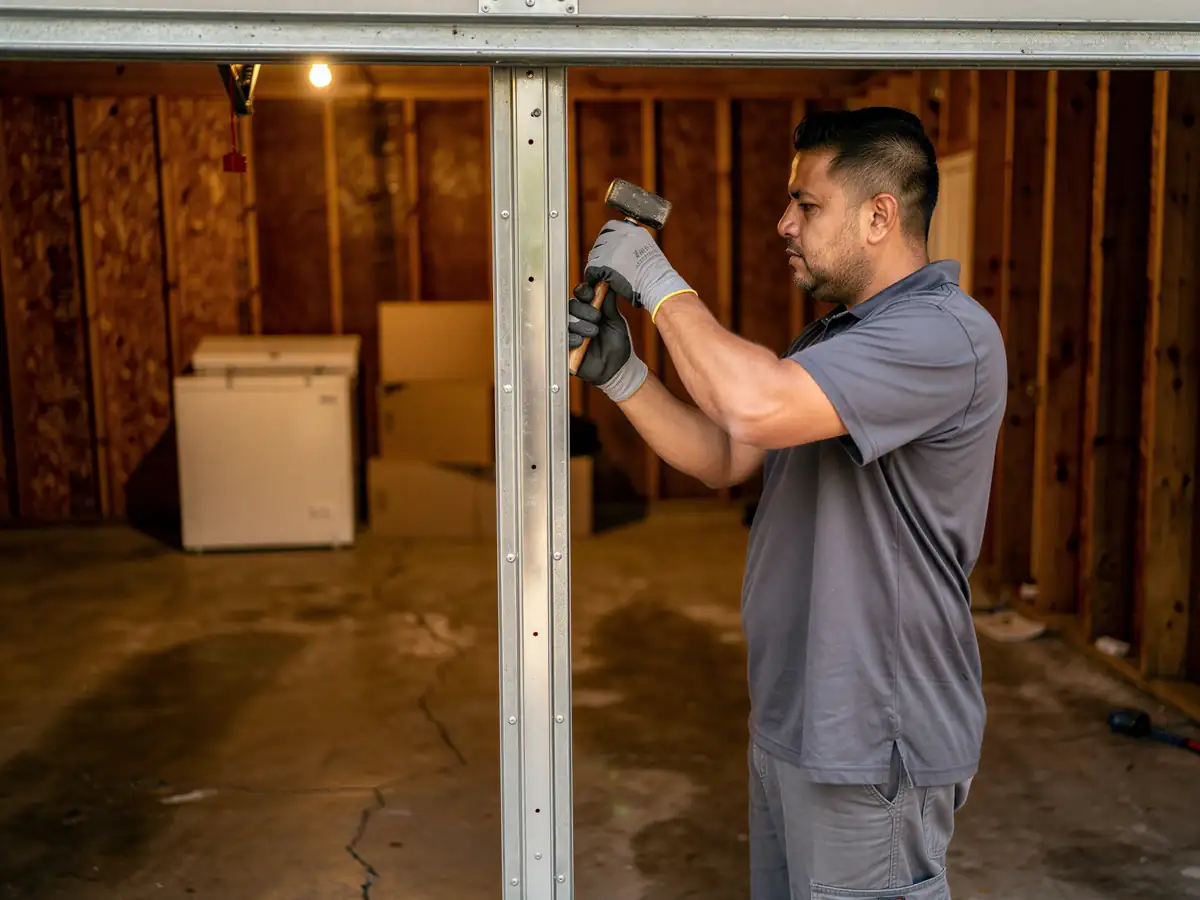
If the track itself has a kink that won't pull back true, replacing that section is the honest call rather than hammering it back into shape - a track that's been forced straight once tends to go again. We also check cable tension on both sides, since an off-track door on one side often points to a cable that's stretched or frayed on that same side. One limitation worth saying plainly: if the door is older and the track is a discontinued profile, we may not be able to match it exactly, and a full track swap on both sides is sometimes the more reliable fix than patching one side.
How Long It Takes
A single bent section or a handful of rollers is typically a same-visit repair once the truck is on site
The door comes off, the section or rollers get replaced, and it's tested through several full cycles before we leave. A full track replacement on one or both sides takes longer, since it means pulling the door down, swapping the hardware, and re-aligning everything from the bracket out, but it's still generally a one-visit job.
What stretches the timeline is a door that's been forced while off track and has bent the panel itself
Not just the hardware. That's a different conversation, because a bent panel on an otherwise sound door sometimes means living with a cosmetic dent versus ordering a replacement panel, and panel availability depends on the door's age and manufacturer. We'll tell you straight which situation you're in before any work starts, not after.