What You Are Seeing
The door catches partway up, or it jerks instead of gliding
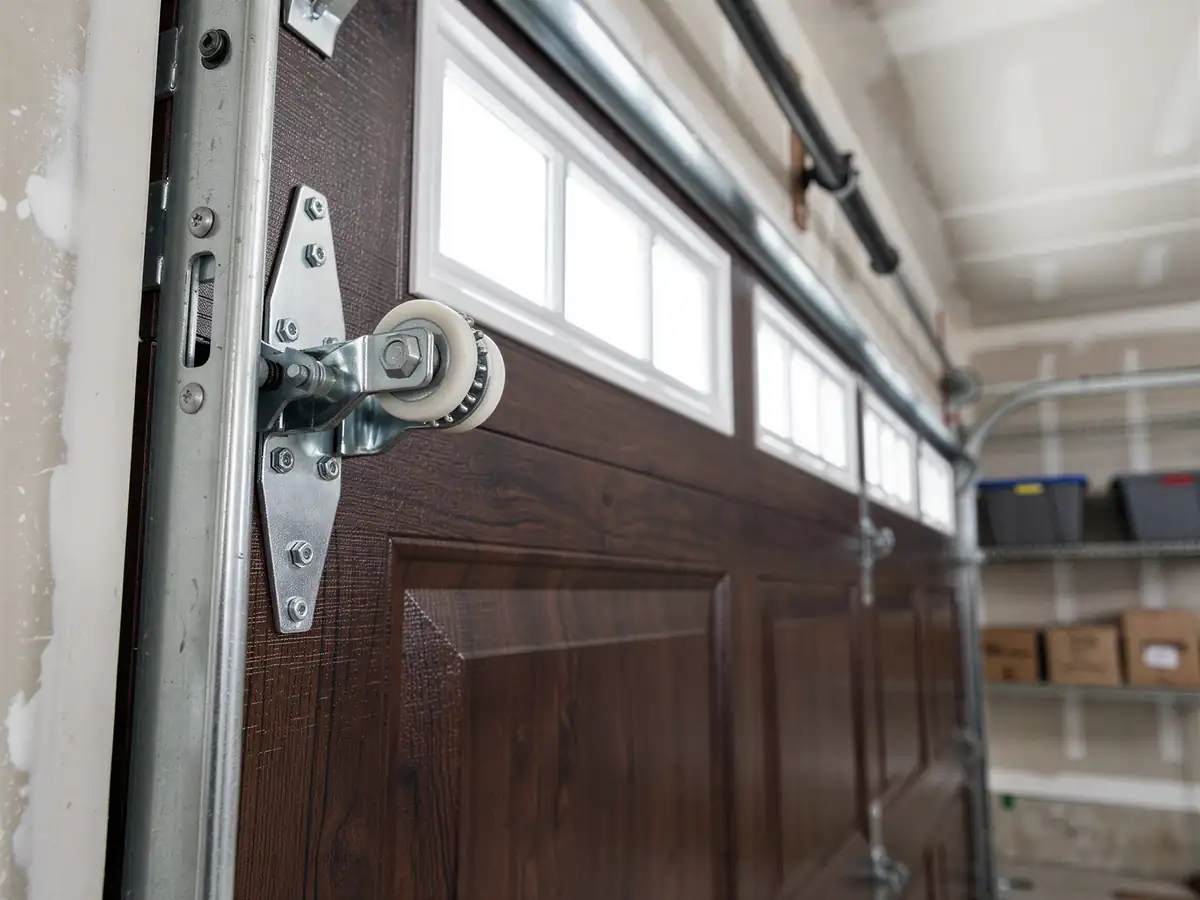
You hear a grinding or popping sound near the top of the track, and sometimes a roller pops out of the track entirely, leaving the door hanging on one side. On older steel rollers, you might see flat spots or a wobble you can feel if you put a hand on the track while the door runs.
This is almost always roller wear, not opener trouble, even though people call us thinking the opener is dying
The giveaway is sound and location - if the noise is specifically where the roller rides the track, not from the motor or the springs overhead, the rollers are the problem.
Across the Owasso service area, most of this housing stock went up between 1965 and 2005
With a lot of it concentrated in the 1980s and 90s. Doors from that era commonly shipped with plain steel rollers on steel tracks, no nylon, no sealed bearings. Thirty-plus years of daily cycles on that hardware wears a groove into the roller stem and roughens the track, and that's what you're hearing.
Why This Fails Locally
Steel rollers need lubrication to ride quiet, and cold snaps make that worse. This area sits in a moderate-cold climate band, which means winter mornings cold enough to stiffen grease and tighten steel-on-steel tolerances, then a swing back into warm, humid stretches that wash lubricant off and invite surface rust on the roller stem. That freeze-thaw cycling is harder on plain steel rollers than it is on sealed nylon ones, and it's a big reason original-equipment rollers from 1980s and 90s builds are failing in bunches right now rather than all at once.
It's not a defect, it's age plus climate doing what it does to a mechanical part with no bearing to protect it. A door that's run two or three times a day for twenty-five or thirty years has put well over 20,000 cycles through those rollers. Add the seasonal temperature swing and track grime builds a rougher surface each year, which accelerates wear on whatever roller is still in there. Once one roller goes, the uneven drag usually speeds up wear on its neighbors, so a single bad roller rarely stays single for long.
What the Fix Involves
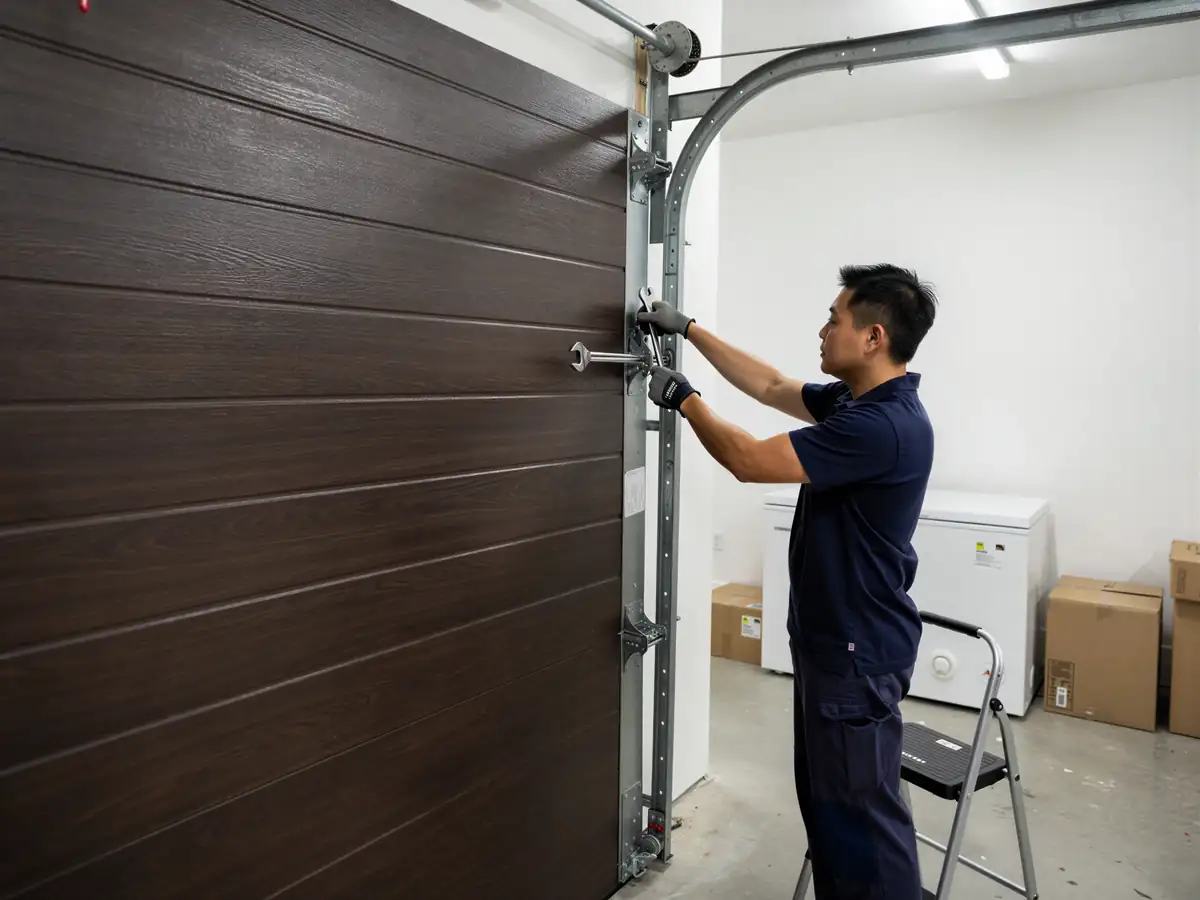
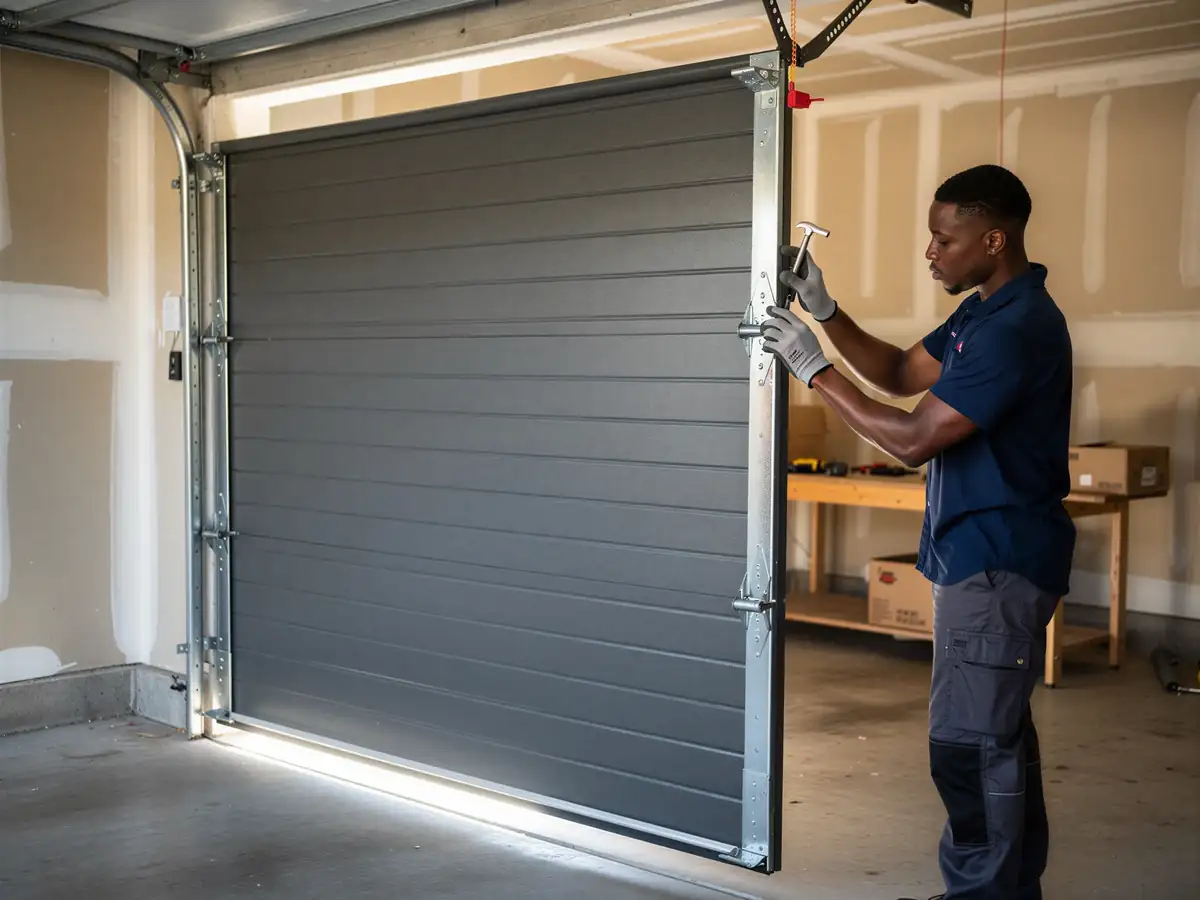
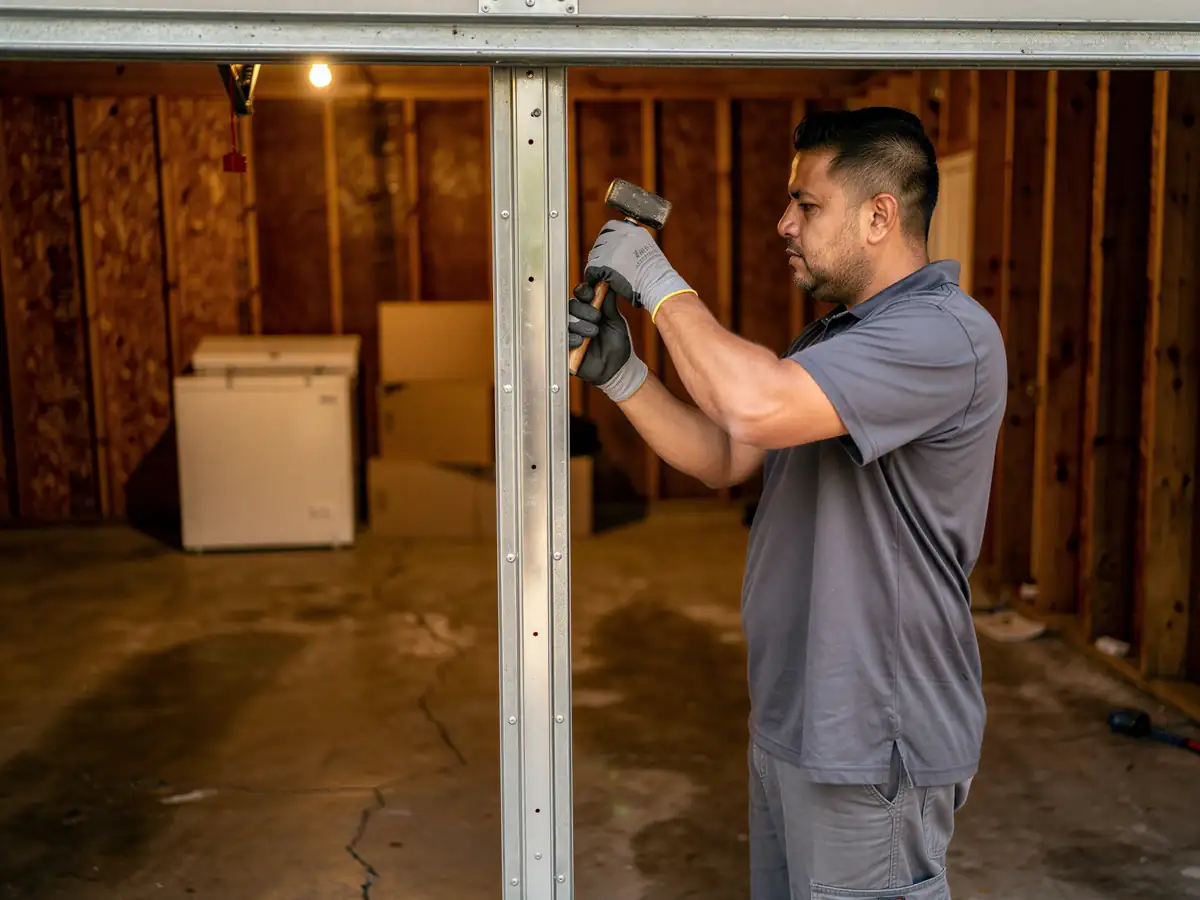
We pull the old rollers, check the track for the gouges or bent spots that chewed through them in the first place, and replace with sealed nylon rollers - quieter, no lubrication needed, and they don't wear a groove into the stem the way steel does. If the track itself is scored or bent from years of rollers running rough, that gets straightened or replaced section by section rather than swapped whole, which keeps the job from turning into more than it needs to be.
We also check the roller brackets, since a bent bracket will chew up a brand-new roller just as fast as it chewed up the old one. No point replacing rollers onto hardware that's going to repeat the problem in a year.
One limitation worth saying plainly: if the track is badly bent or rusted through in multiple spots, roller replacement alone won't fix the binding - that's a track replacement job, and we'll tell you that up front rather than sell rollers that won't solve it.
How Long It Takes
A straightforward roller swap on a double door, both sides, usually runs under an hour once we're on site
If the track needs straightening or a section replaced because of wear from the old rollers, add time for that - it's still typically a same-visit job, not a return trip. We carry common sealed-nylon roller sizes on the truck, so parts aren't usually what slows things down.
Where it takes longer is a door that's been grinding for a long while and has worn the track unevenly on both rails
Or where a bracket has bent enough that it needs a replacement rather than a bend-back. We'll walk you through what we're seeing before any of that gets replaced, so you know what you're paying for and why.