Roller Replacement for Catoosa's 1980s Garage Doors
Most Catoosa garages date to the mid-1980s builder boom, with steel doors riding on the stamped steel rollers that era shipped standard. Here's what wears and when to replace.
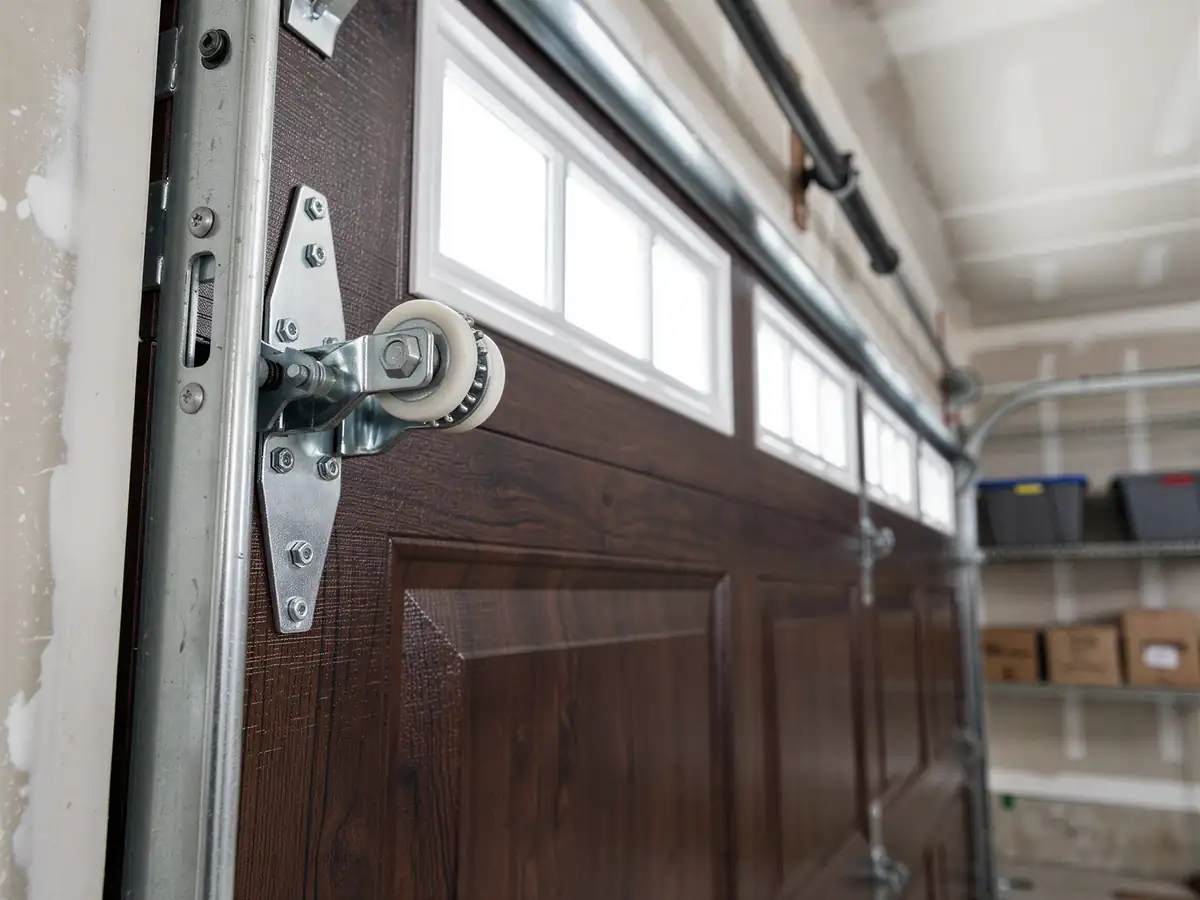
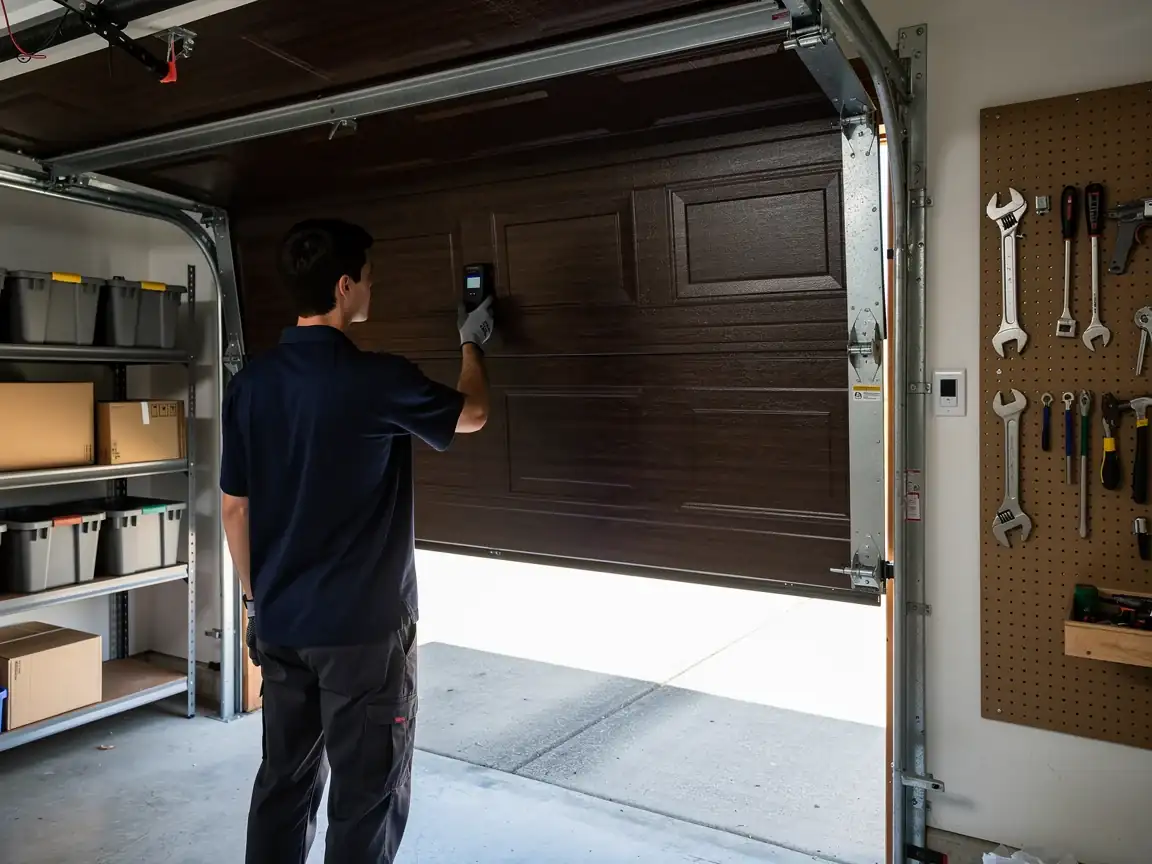
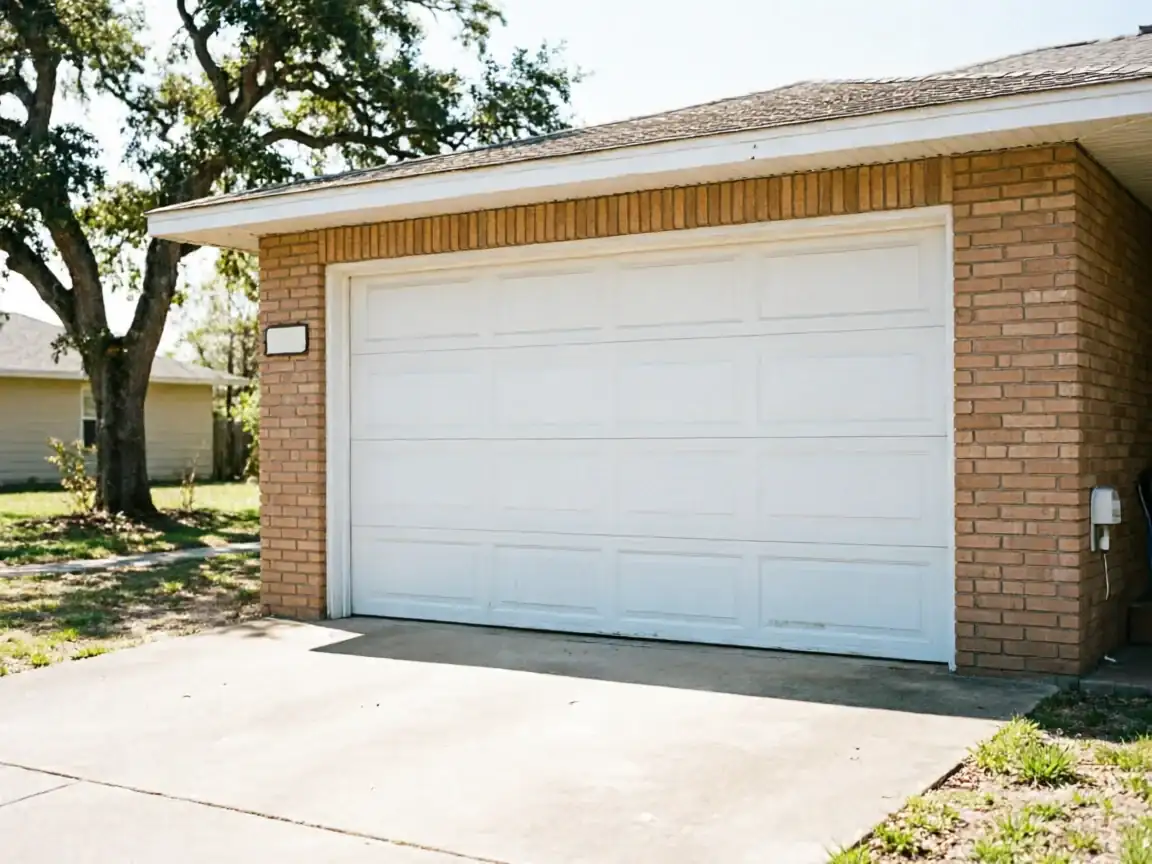
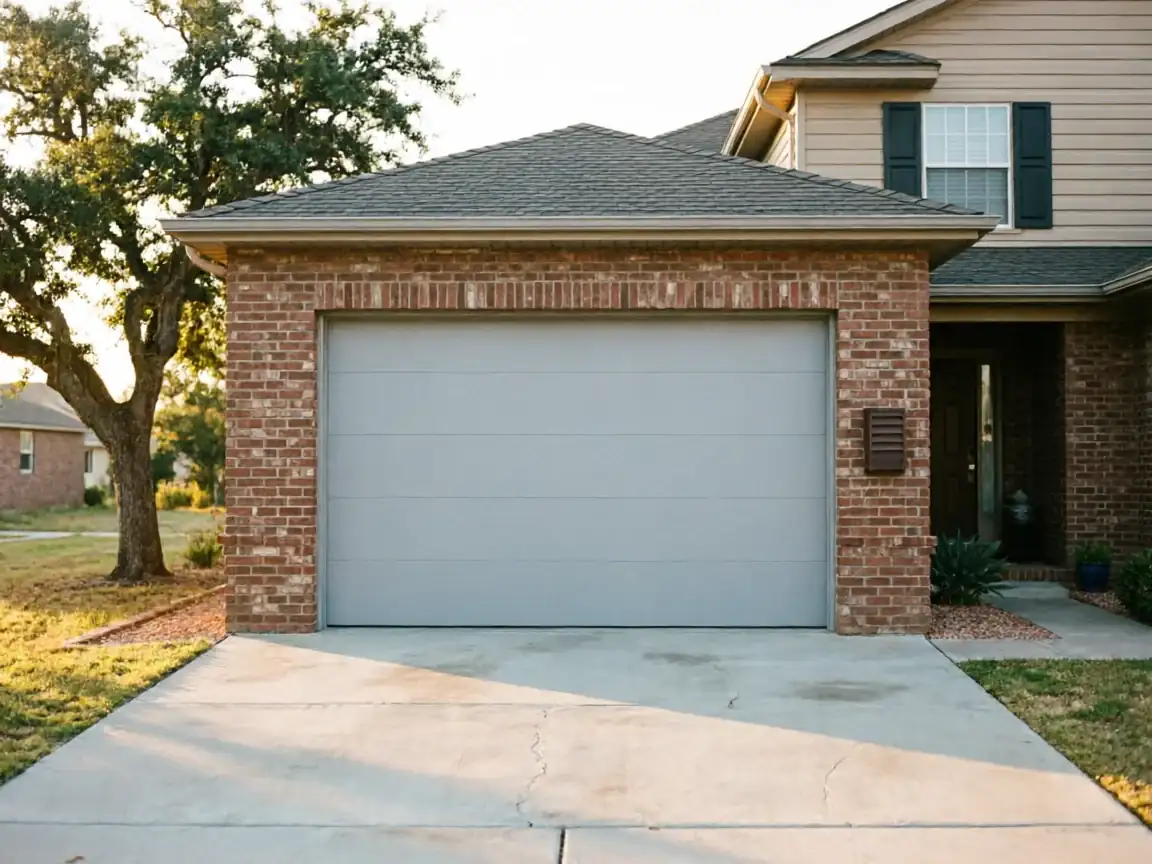
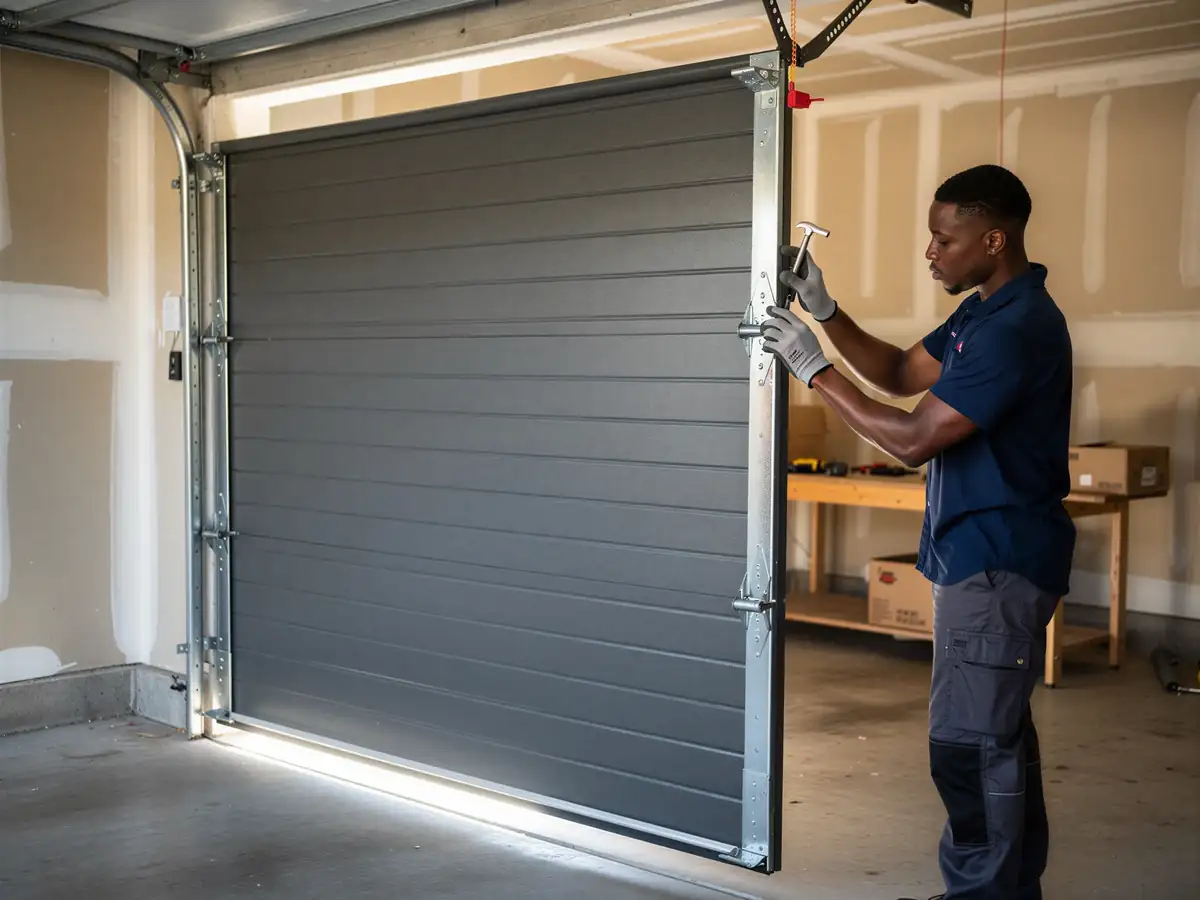
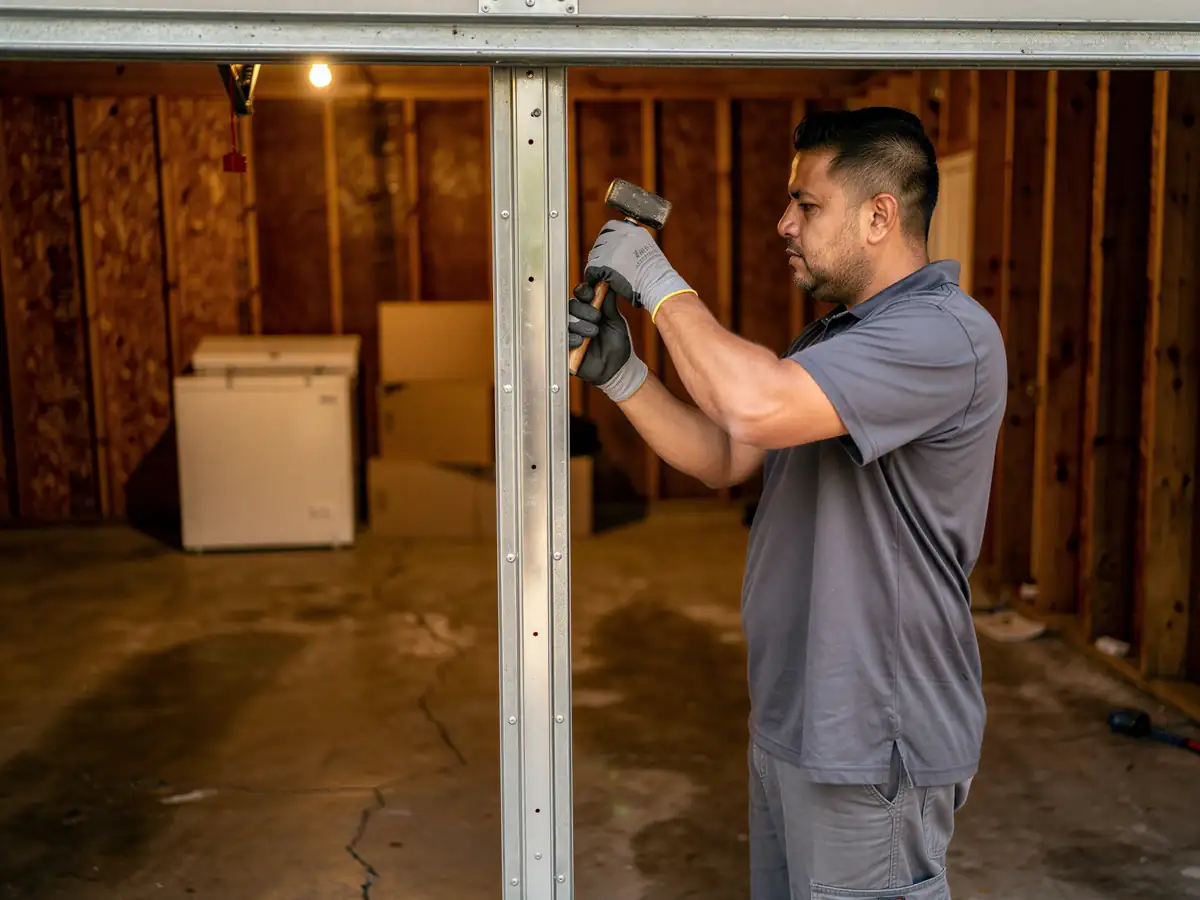
Catoosa's housing stock centers on 1986, which means most garages here still have the steel door that shipped with the house - a single flat or short-panel steel slab, usually 16x7 for the double bay, hung on steel tracks with 7-ball or 10-ball galvanized rollers pressed onto a plain steel stem. Nothing exotic, nothing nylon. Builders in that era spec'd the cheapest roller that would pass inspection, and thirty-plus years later that's exactly the part giving out. You'll hear it before you see it: a grinding or clacking as the door travels, worse at the top of the run where the track curves into horizontal. Some rollers have worn grooves into the track itself at that point, which is a second repair riding on the back of the first. The stem on these older rollers is also the weak point - it bends under a door that's gone slightly out of square, and once it's bent the roller rides crooked no matter how new it is.
How Long It Takes
A straight roller swap on a door this age - all ten rollers, same track, no track correction - is a same-visit job once the truck is on site. The complication in Catoosa isn't the labor, it's the 8-mile run from Owasso: this isn't a town with a branch or a standing crew, so the job gets scheduled on the route rather than dispatched same-hour. Worth knowing going in rather than finding out when you call. If the track has grooved from years of a worn roller riding in it, or the door has racked and needs squaring before the new rollers will seat right, that adds time on top of the roller swap itself - still one visit, just a longer one.
The Complications
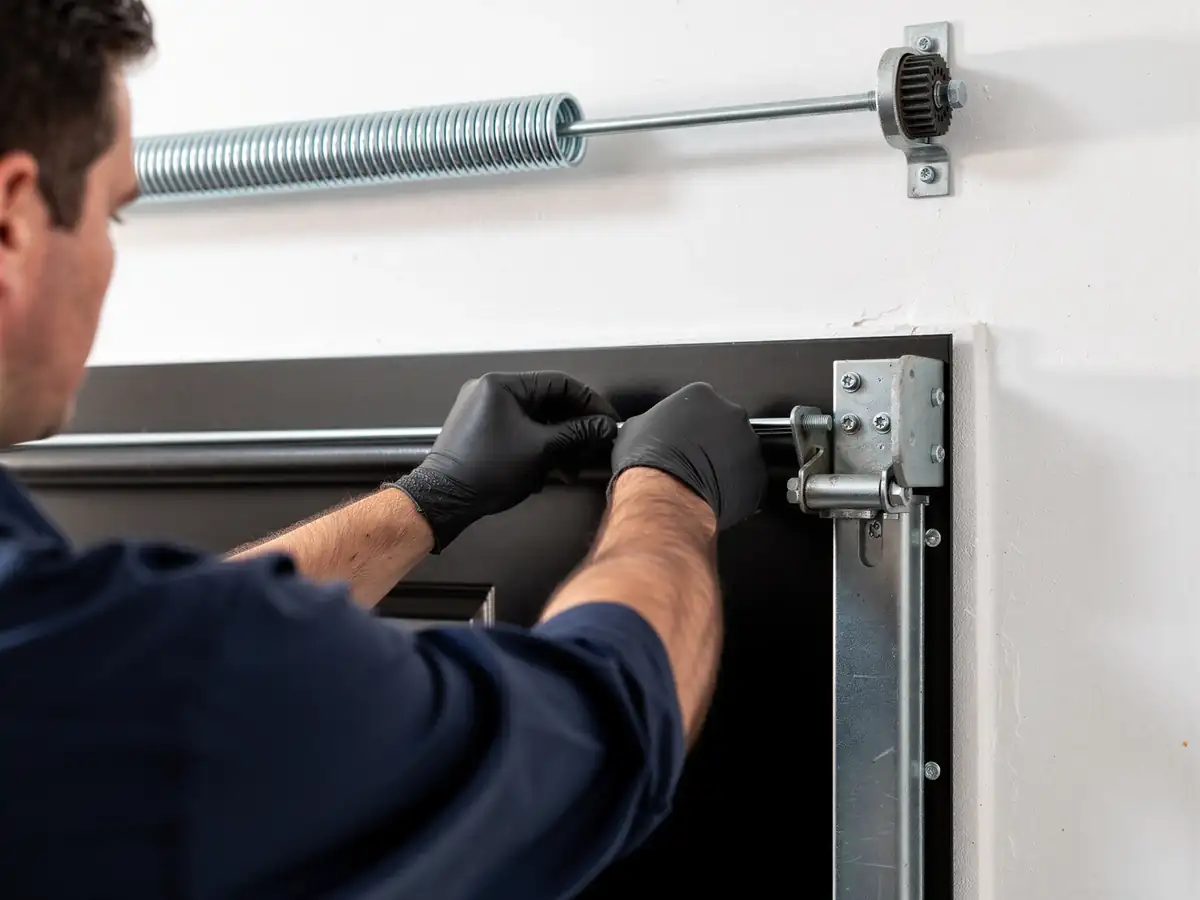
The complication specific to 1986-era doors is the track wear mentioned above: a roller that's been grinding for a year or two doesn't just wear itself, it wears a shallow channel into the galvanized track, and a new roller dropped into a worn channel will clack just as loud as the old one did. At that point it's a track-and-roller job, not a roller job. The other wrinkle with original hardware from this period is that the roller stem size and the hinge spacing aren't always what current stock rollers expect - most of Catoosa's garages sort into a handful of builder patterns rather than custom work, so matching stem length to the existing hinge is usually straightforward, but it's a measurement, not an assumption. Climate plays a smaller role here than people expect; this is a cold-moderate band, not a place with the freeze-thaw cycling that cracks nylon rollers outright. The failure here is mileage and cheap steel, not weather.
Why This Fails Locally
At roughly 2,955 households in Catoosa, the housing base is narrow enough that the roller failure pattern is consistent rather than scattered - most doors are the same builder-grade steel from the same stretch of years, which is why the fix is usually the same fix. Median household income here runs $70,875, a notch below the wider service area's $77,403, and that gap shows up in the decision homeowners make: more Catoosa calls end in a roller-and-track repair than a full door replacement, because the door itself is often still sound even when the rollers are shot. We won't talk you into a new door when a $150 roller set and a track straightening will get you another decade. We also won't pretend we're down the street - we're coming from Owasso, and that's the honest answer on timing.
How it works
From “it’s stuck” to “it’s fixed”
01
Tell us what’s wrong
Describe the symptom - won’t open, loud bang, opener runs but the door won’t move.
02
On-site diagnosis
A technician tests the door under power and by hand and finds what actually failed.
03
Clear, up-front plan
You get the fix that’s needed and what drives the cost - before any work starts.
04
Repaired & tested
The repair is done, the door is set true and tested, and the work area left clean.
Not sure which repair your door needs in Owasso, OK? Describe what it’s doing - every job starts with a diagnosis.
Steel rollers from this era tightened down with age sound loudest when they're cold and the garage hasn't moved all night. It's not a sign of sudden failure, just the normal noise of worn steel - though if it's new, loud, and getting worse week to week, that's the roller telling you it's close to seizing.
Do I need new track with new rollers?
Not always. If the old roller hasn't ground a visible groove into the track, new rollers alone usually fix it. If there's a worn channel where the door travels most, the new roller will ride in that groove and make the same noise - that's when track comes into the job too.
Is it worth replacing the whole door instead?
Usually not, if the door itself is a flat or short-panel steel slab from the 1980s and still hangs straight. Roller and track work is far cheaper than a new door, and most of these old steel doors have plenty of service life left once the hardware underneath them is sound.
Ready to get your garage door sorted?
Tell us what it’s doing and where you are in Owasso - we’ll take it from there.