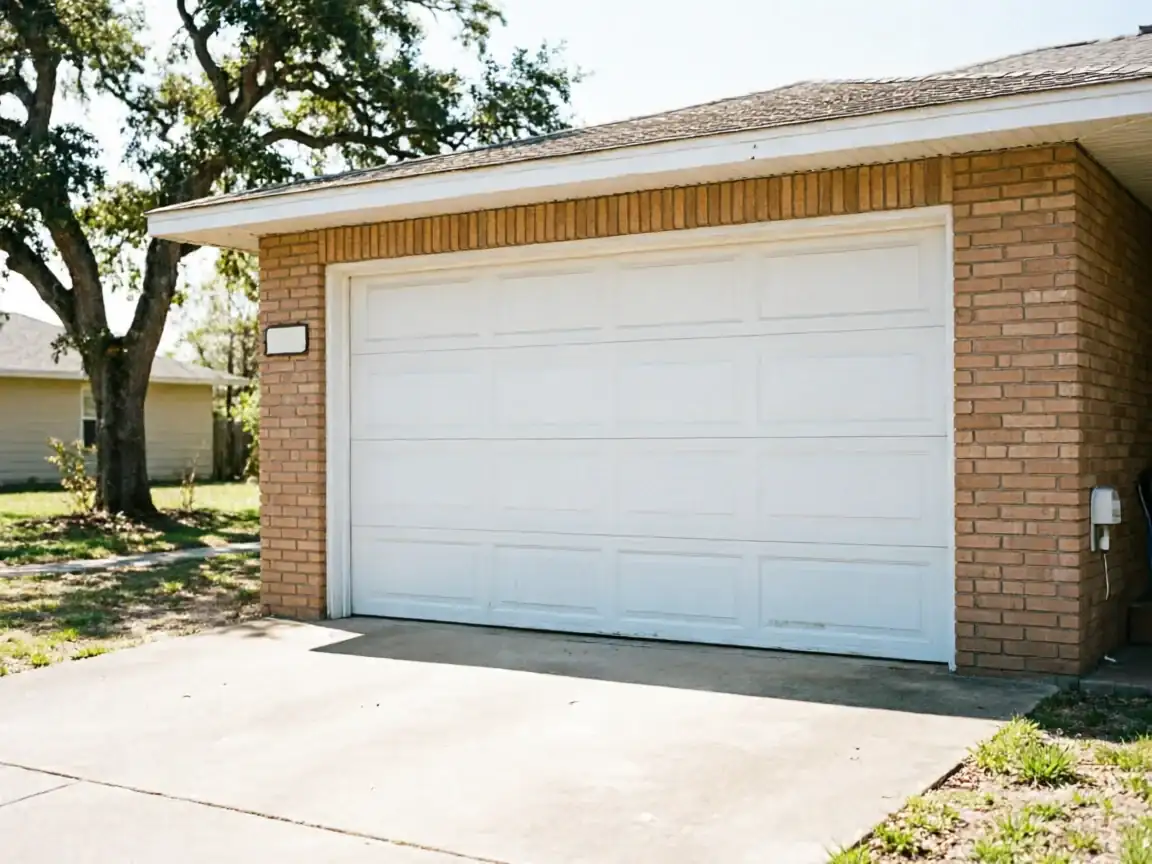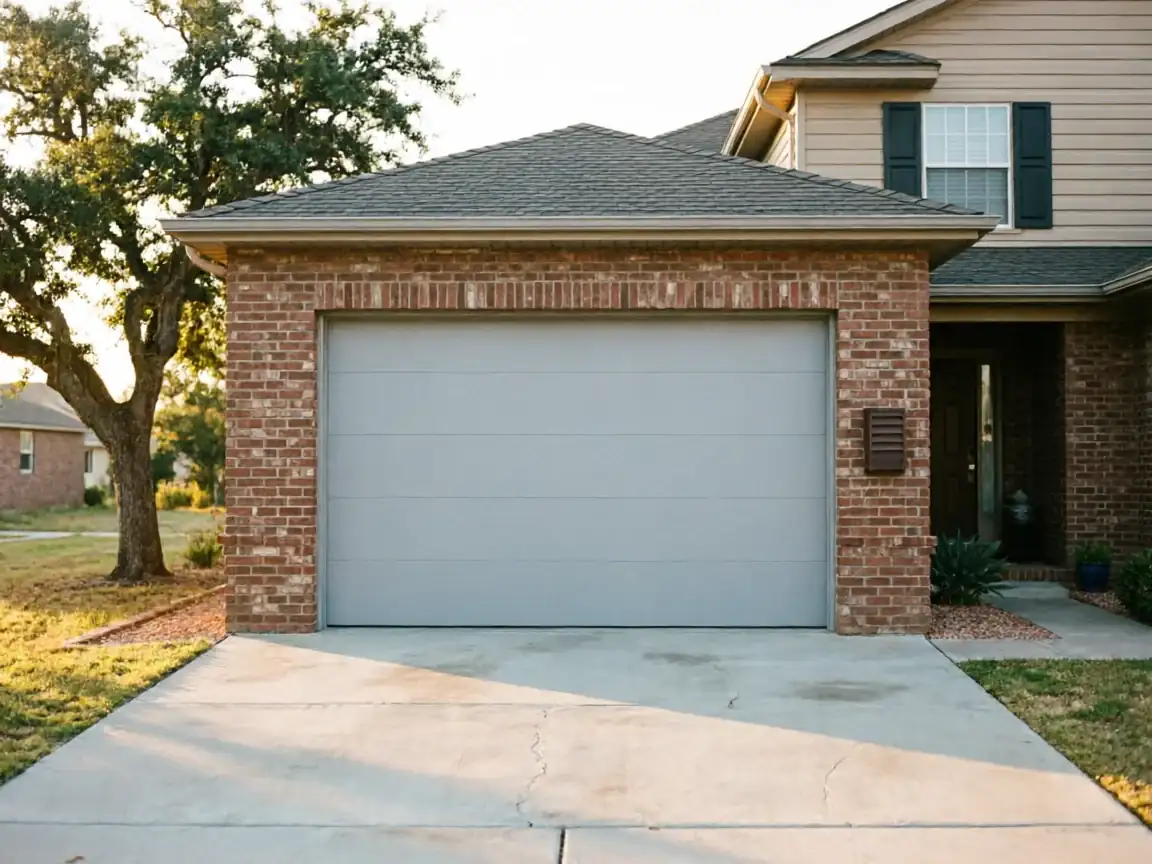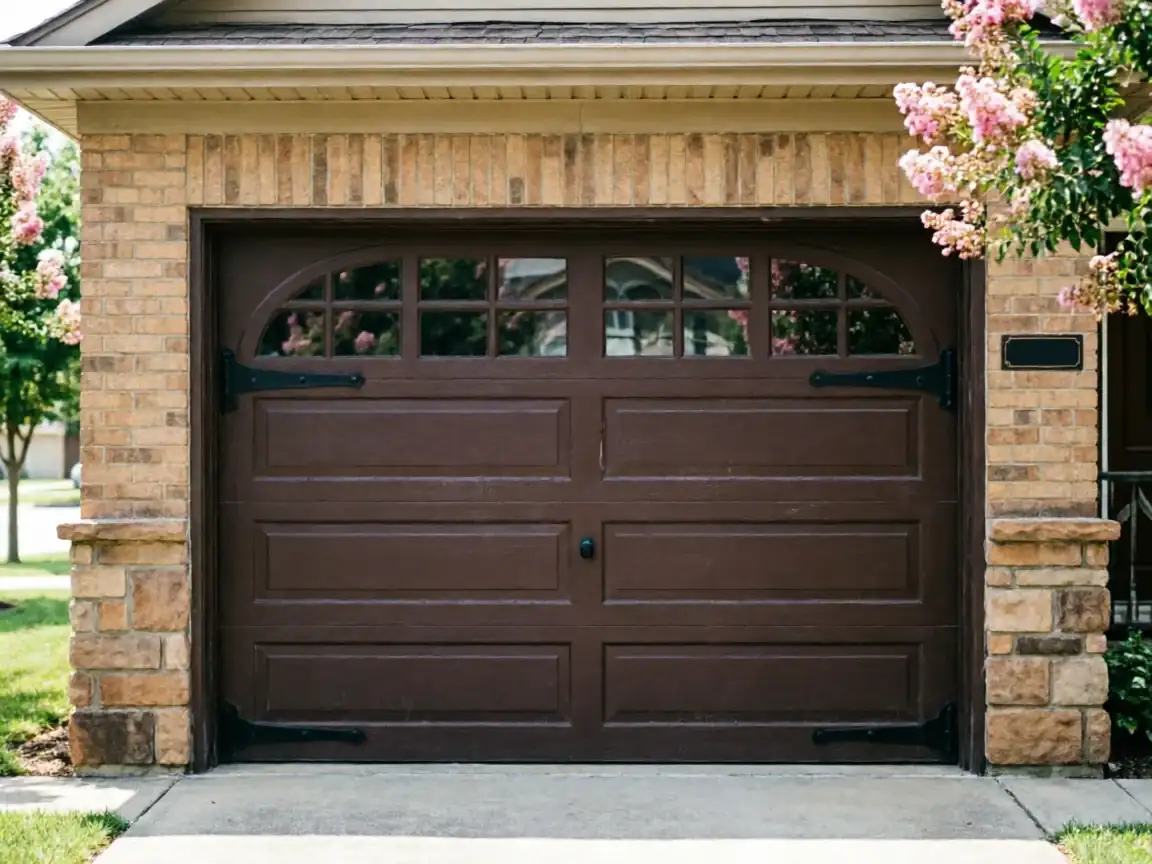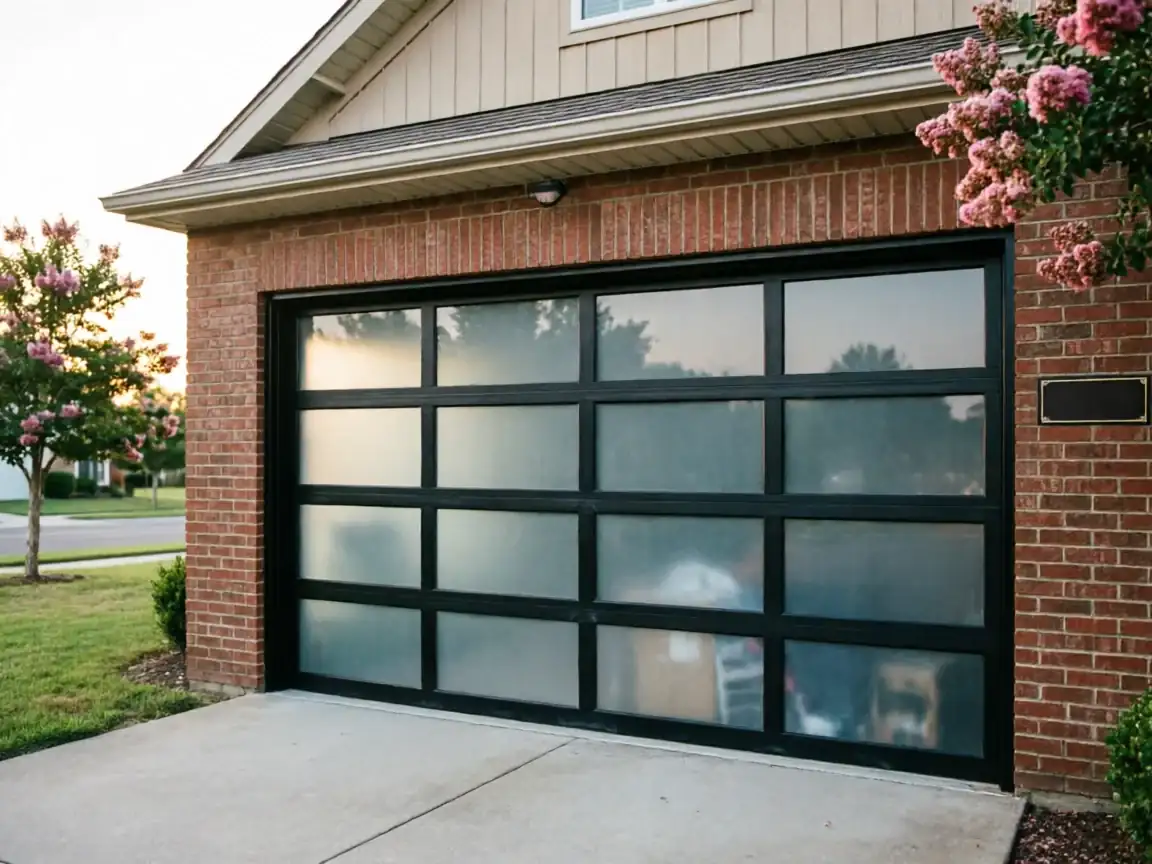
What You Are Seeing
The drive from Owasso out to Catoosa runs about 8 miles
And that number matters more than it sounds like it should. It's close enough that a call here doesn't change how we price the job, but far enough that we build it into the route before we head out, not after. If you call in the morning, you're not competing with a dozen other Catoosa jobs on our board - you're one stop on a line that starts in Owasso and works outward.
- 8 miles
Once we're there, the houses tell their own story
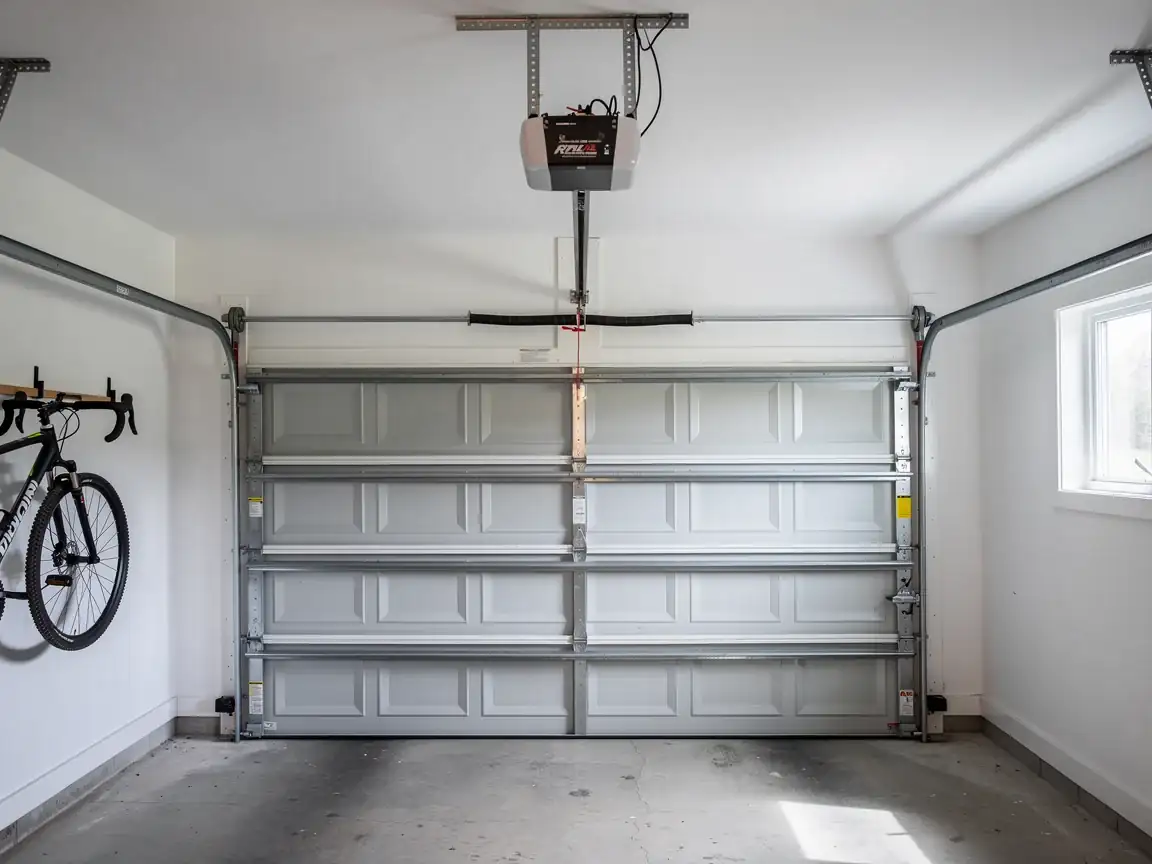
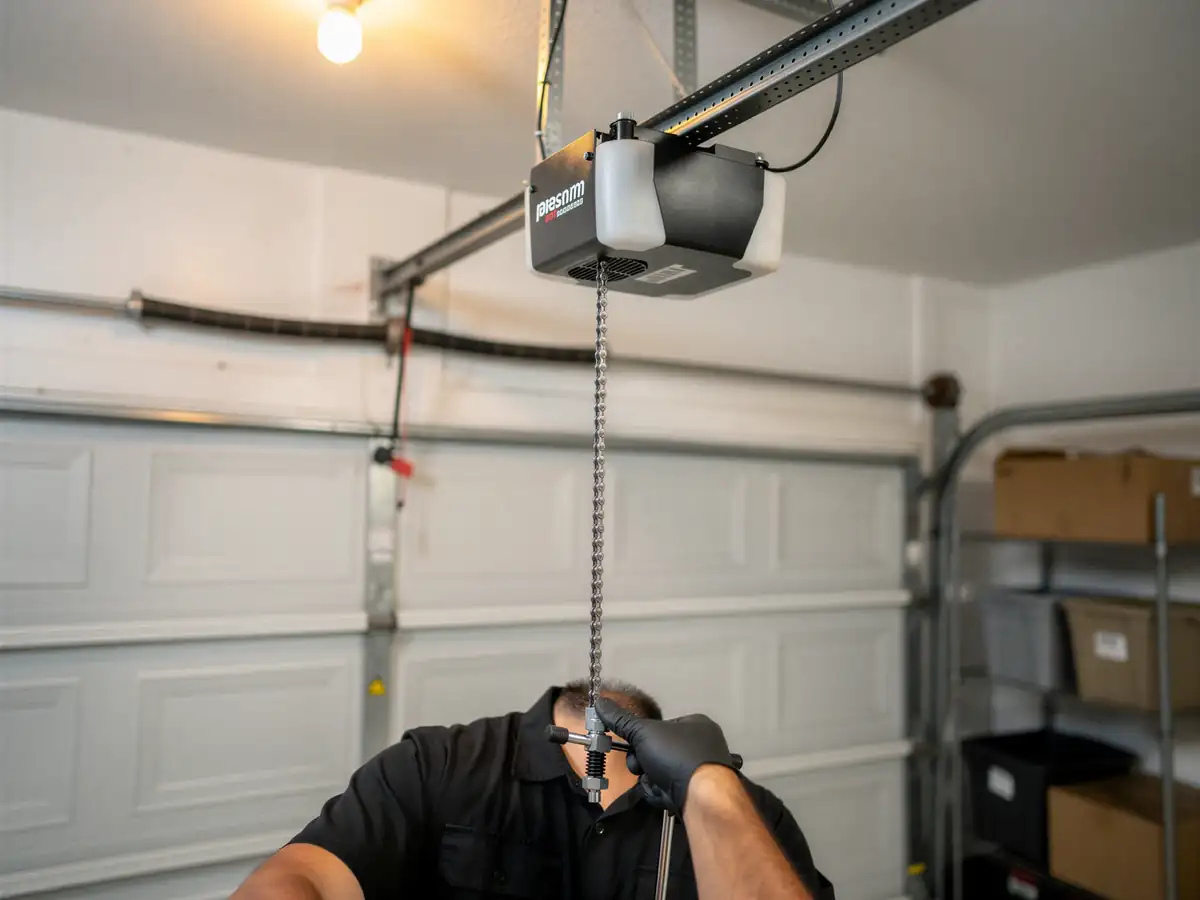
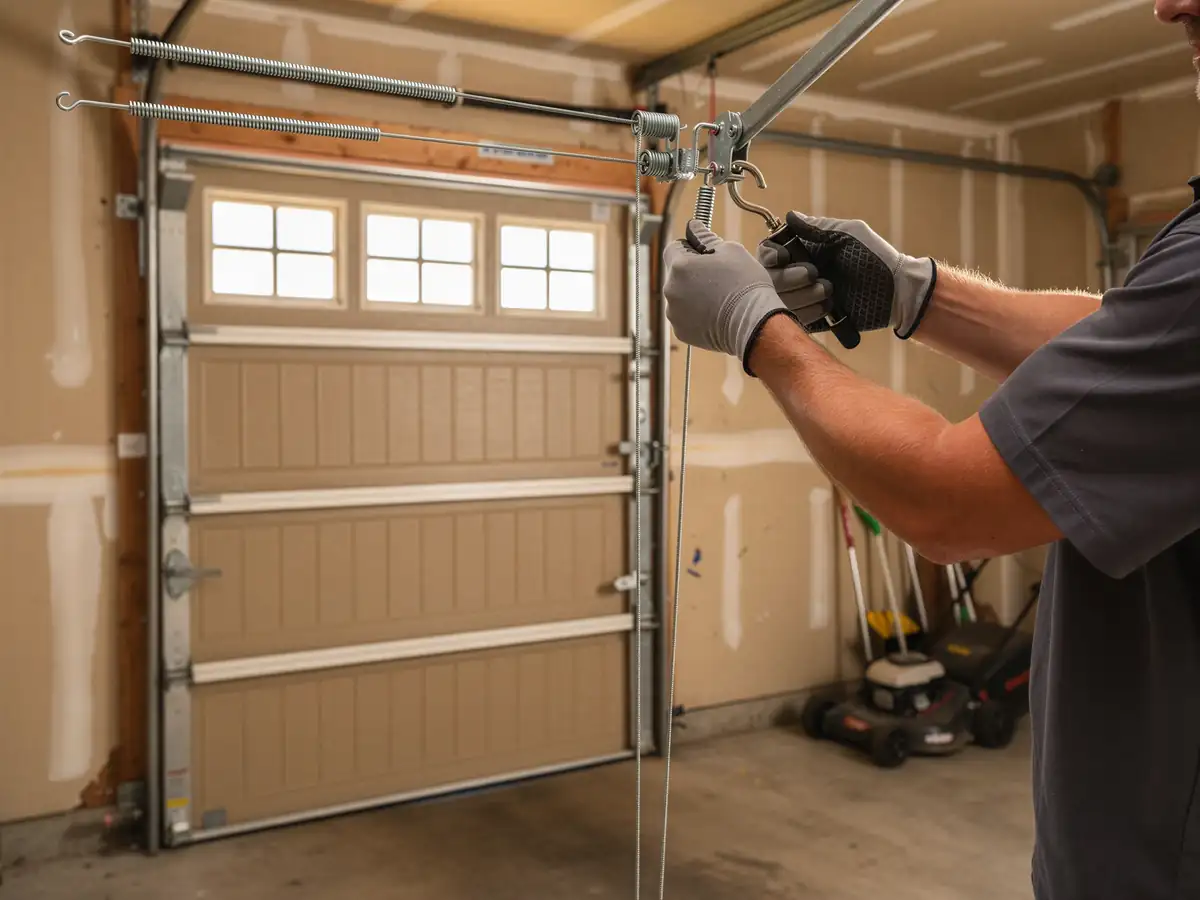
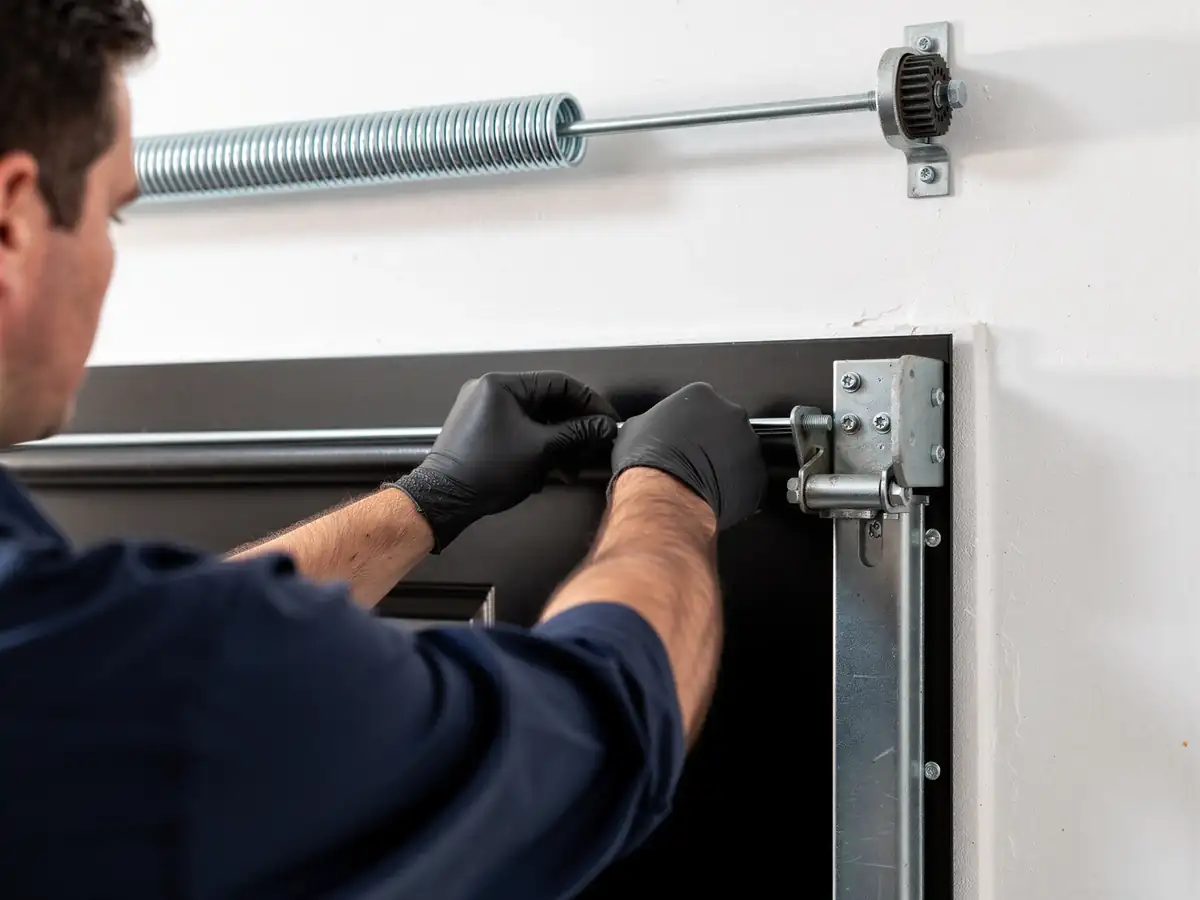
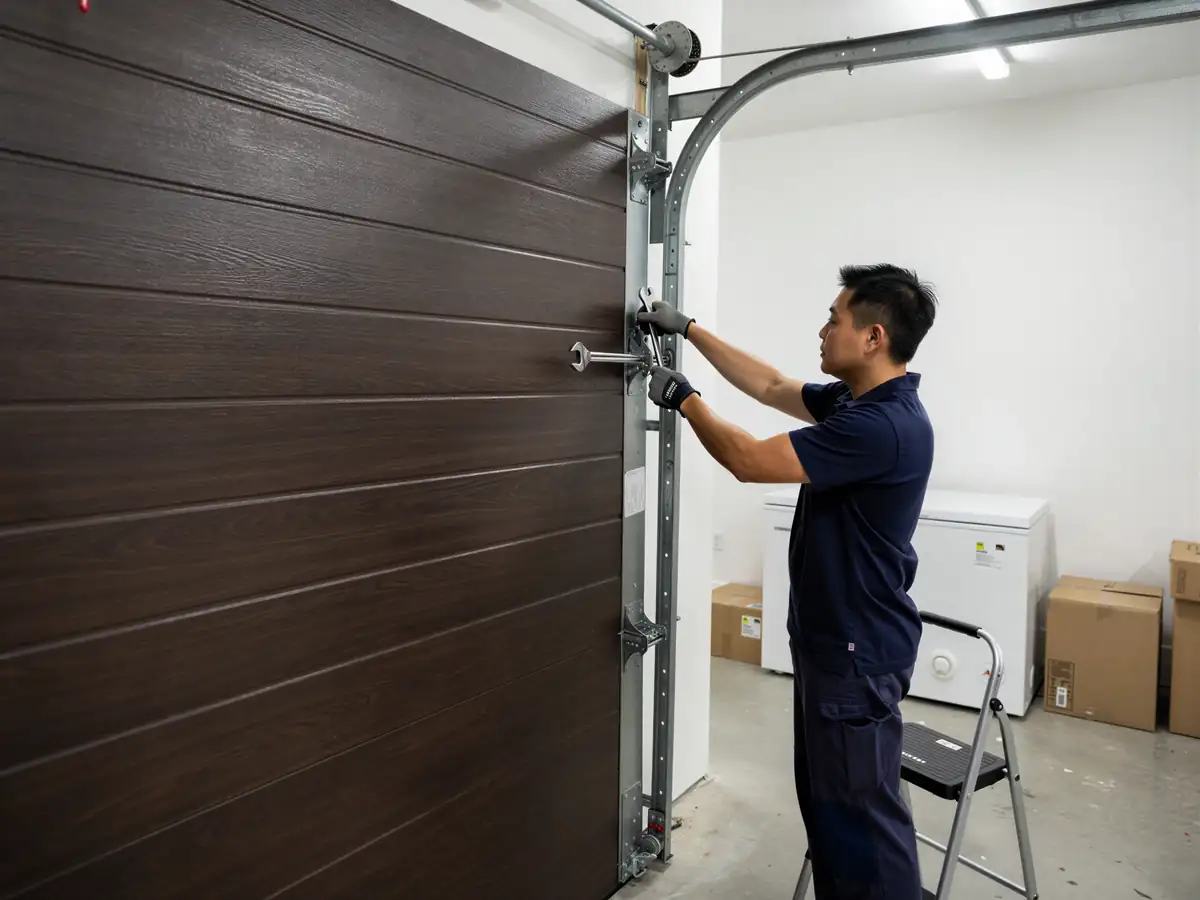
Catoosa's housing stock centers on 1986, which puts a lot of doors and openers from the mid-80s through the 90s still in service. That era means steel sectional doors, often on extension-spring setups rather than the torsion-only hardware you'd expect on newer construction. The openers from that period are mostly chain-drive, and a fair number have never had the gears or sprocket replaced. If your door groans on the way up and sticks halfway down, that's consistent with hardware pushing 30 to 40 years old, not a one-off fluke.
- 40 years
How Long It Takes
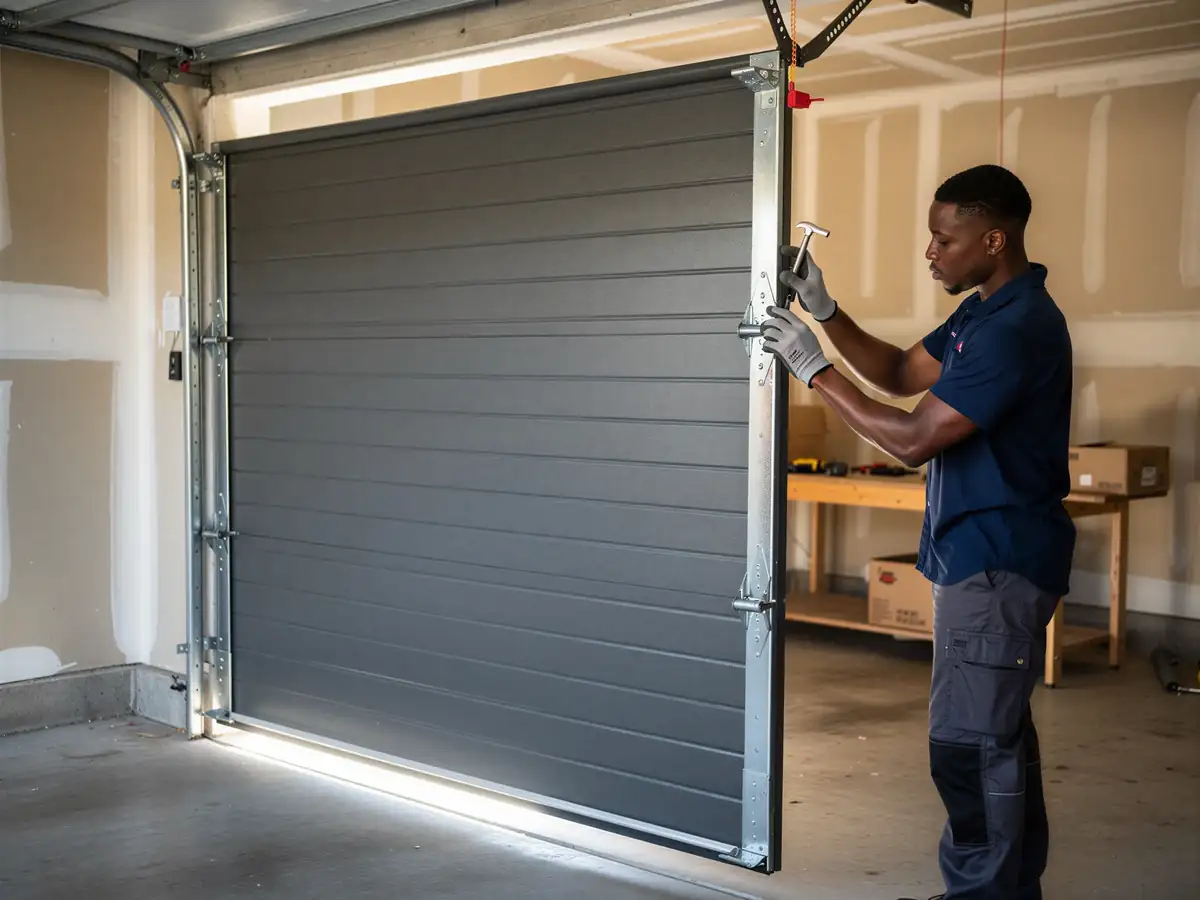
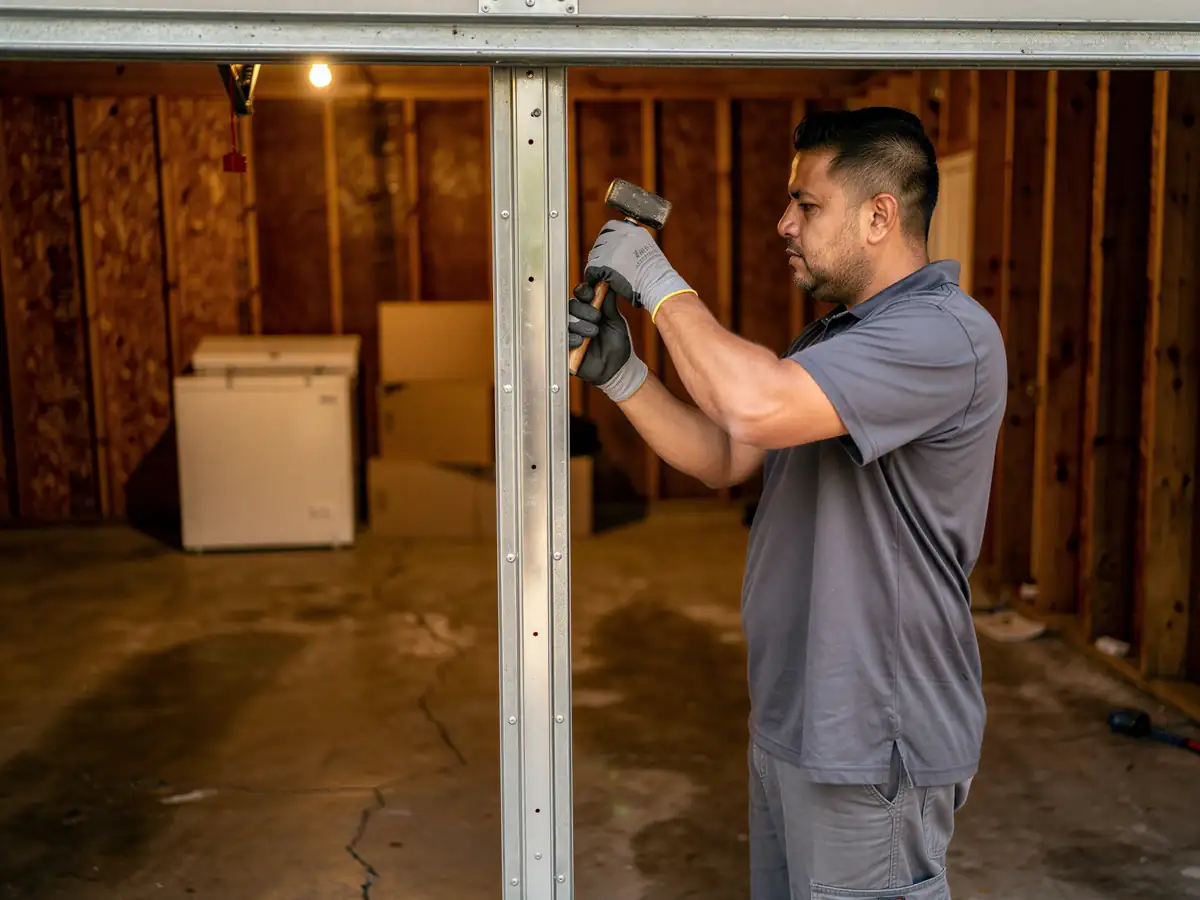
We can't quote you a response window for Catoosa specifically - we run out of Owasso, and the 8-mile drive is part of every call, not an exception to it. What we can tell you is how that affects the job itself once we're on site. A straightforward spring swap or opener repair on a door from the 1980s stock doesn't take longer because it's in Catoosa; it takes however long that repair takes anywhere. The drive adds time to how fast we can get there, not to the work once we start.
What does add time on this side of the service area is parts. With 2,955 households in Catoosa and a housing stock centered on the mid-80s, some of the extension-spring and older chain-drive setups use parts that aren't sitting on a standard truck stock the way current torsion hardware is. If your door matches that older pattern, we may need a second trip to bring the right spring or sprocket rather than guessing on the first one.
The Complications
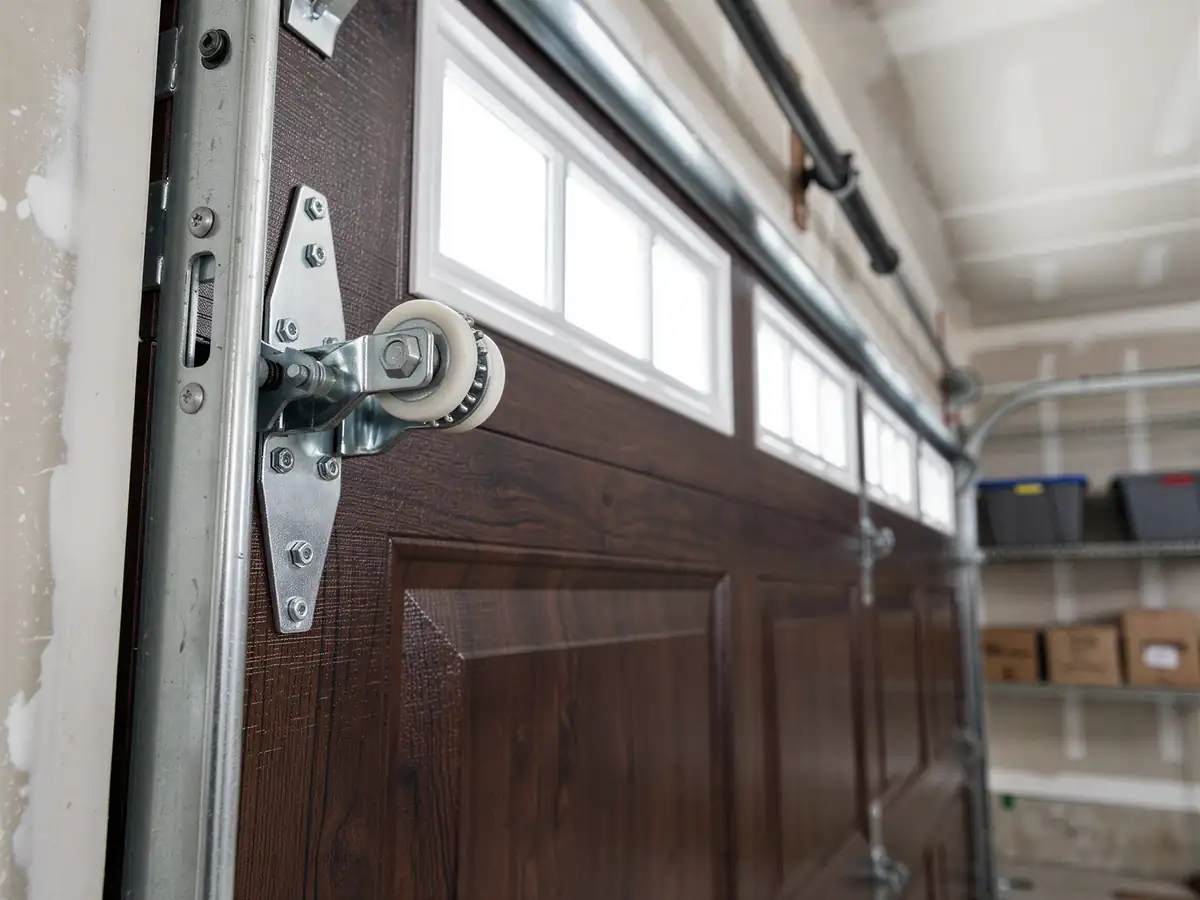
Catoosa sits in the same cold-moderate climate band as the rest of the area we cover, which means winter cold snaps and summer heat swings both put stress on steel doors and the hardware holding them. On a 1980s door, that stress shows up as rust on exposed springs, hardened lubricant in the tracks, and openers that struggle to pull a door that's gotten heavier with age and weather.
Income is the other piece worth naming honestly. Catoosa's median household income runs $70,875, a bit below the wider service area's $77,403. That doesn't change how we diagnose a problem, but it does change the conversation about repair versus replacement. On a door old enough to be original to a mid-80s build, we'll tell you straight when a repair is the better call for the money and when you're better off putting that money toward a new door instead of patching a 35-year-old panel that's going to fail again in a different spot next year.
Why This Fails Locally
The failure pattern we see most in Catoosa traces straight back to the 1986 median build year
Extension springs on doors from that era weren't built for the kind of cycle count a door sees over three or four decades, and when they go, they tend to go without warning - a loud bang, then a door that won't lift. Torsion conversions exist, but on an original 1980s track and drum setup, converting isn't always the cheaper or simpler fix.
The other pattern is the chain-drive opener that's quietly losing power year over year
Owners notice the door closing slower before they notice it stalling outright, and by the time it stalls, the motor's usually done, not just the gear kit. With 2,955 households in this slice of the service area and a housing stock that's aging together, we expect to keep seeing both of these on the same timeline for a while yet.
- 2,955 households