Why This Fails Locally
Most houses in Justice went up around 1992
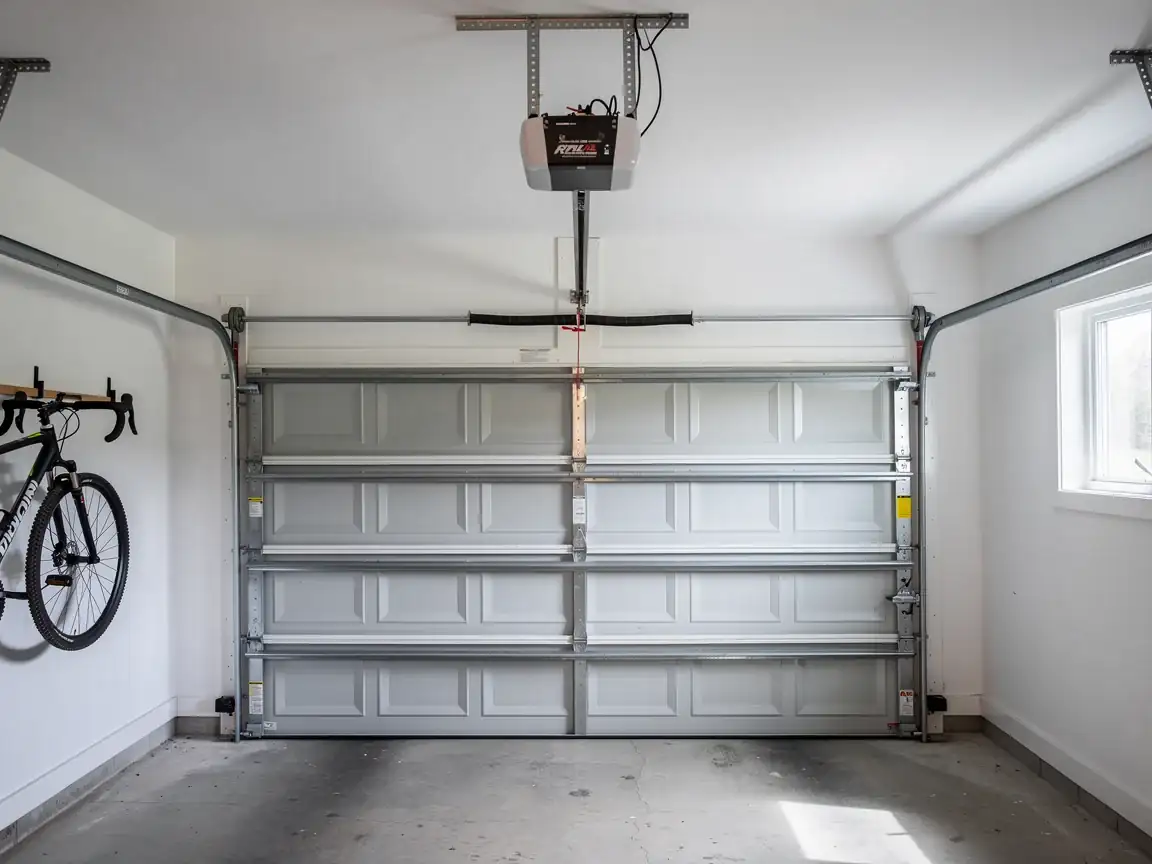
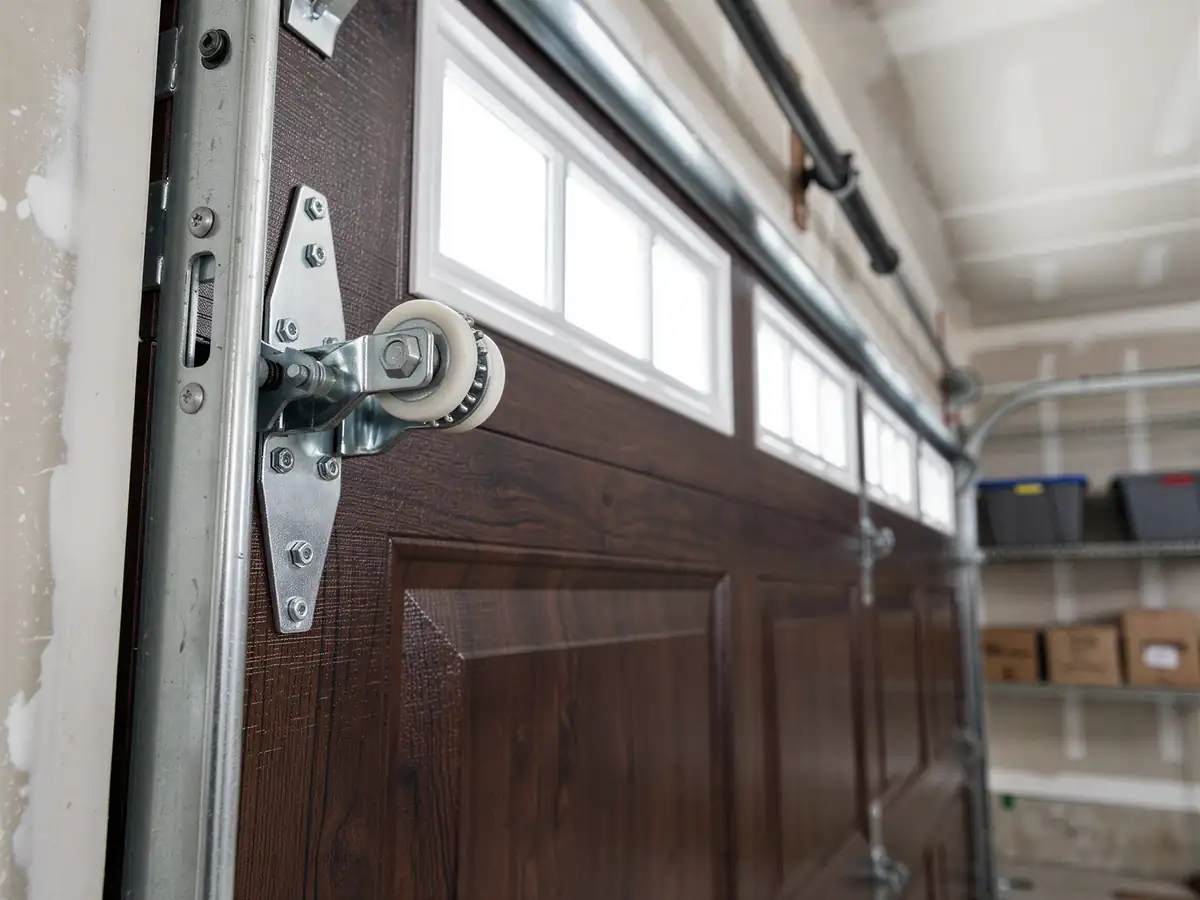
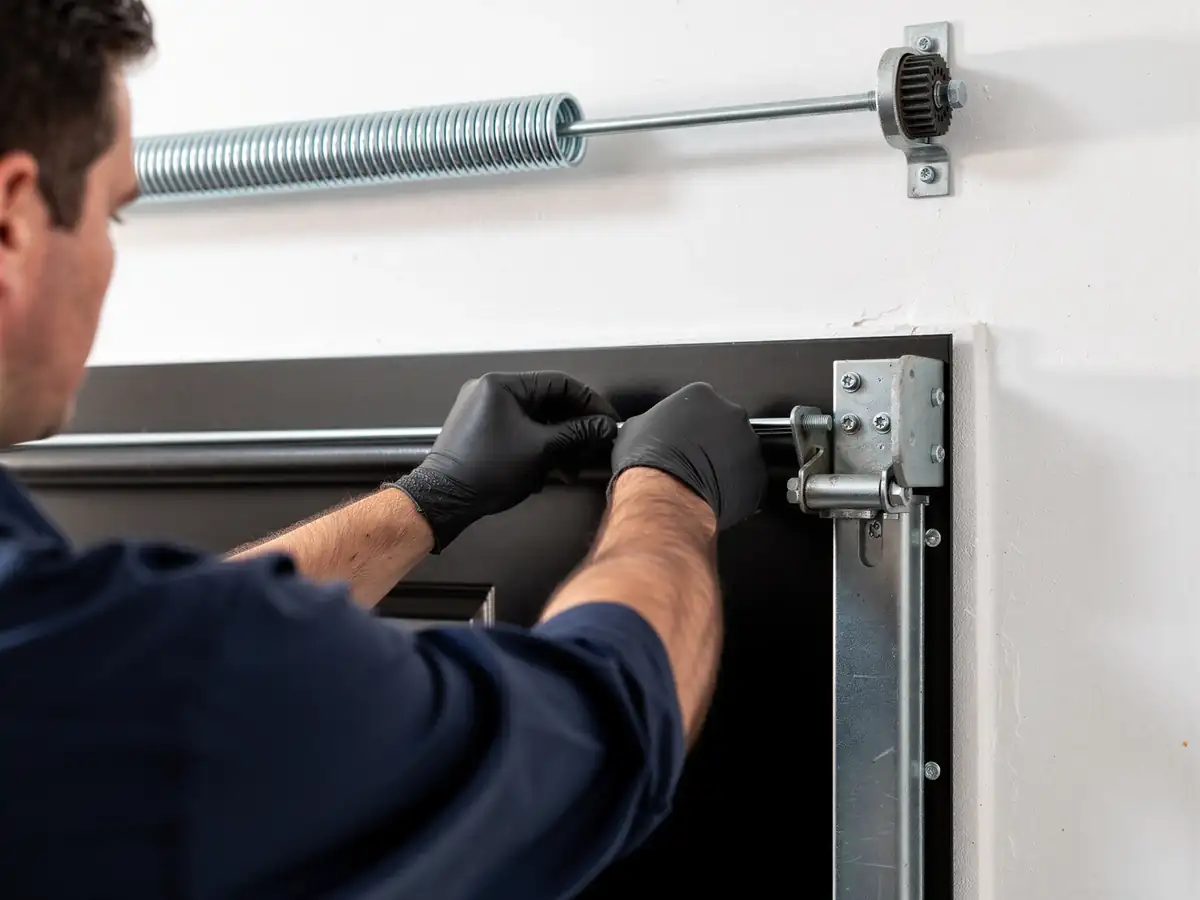
And a lot of that original hardware is still hanging on the wall. Torsion springs, the first opener, the roller tracks - none of it was built to last forever, and thirty-plus years is well past the point where a spring should still be doing its job on a daily basis. A door from that build year wasn't engineered for today's heavier insulated panels either, so when a homeowner finally swaps the door itself, the old track and springs often aren't rated for the new weight.
With only 477 households in Justice, this isn't a neighborhood with a single dominant builder pattern the way some larger areas have
But the 1992 median year still tells you most of what you need to know walking up to a job. The spring is original until it snaps, usually without warning, usually when the door is halfway up. That's not a maintenance failure on the owner's part. It's just what thirty years of cycles does to steel.
- 477 households
We come out from Owasso, about 15 miles off
So we plan the trip and bring what the job calls for rather than guessing once we're on site.
- 15 miles
What It Costs
We don't have a Justice-specific price list to quote here, and we're not going to make one up. Installation cost depends on door size, insulation level, whether the opener gets replaced too, and whether the existing track and springs can carry the new door's weight or need to go as well. A single door on original 1992 hardware usually needs more than just the door itself - the springs and track are often part of the job whether the homeowner planned on it or not.
Justice households run a median income of $93,580, well above the wider service area's $77,403, and that tends to show up in what people choose: insulated steel doors, quieter belt-drive openers, sometimes a second door replaced at the same time rather than waiting. None of that changes what the job actually requires structurally, but it does change what gets picked off the option list.
We'll give you a real number once we've seen the door, the opening, and what's behind the panel. Anyone quoting a flat price sight unseen on a house this age is guessing.
What You Are Seeing
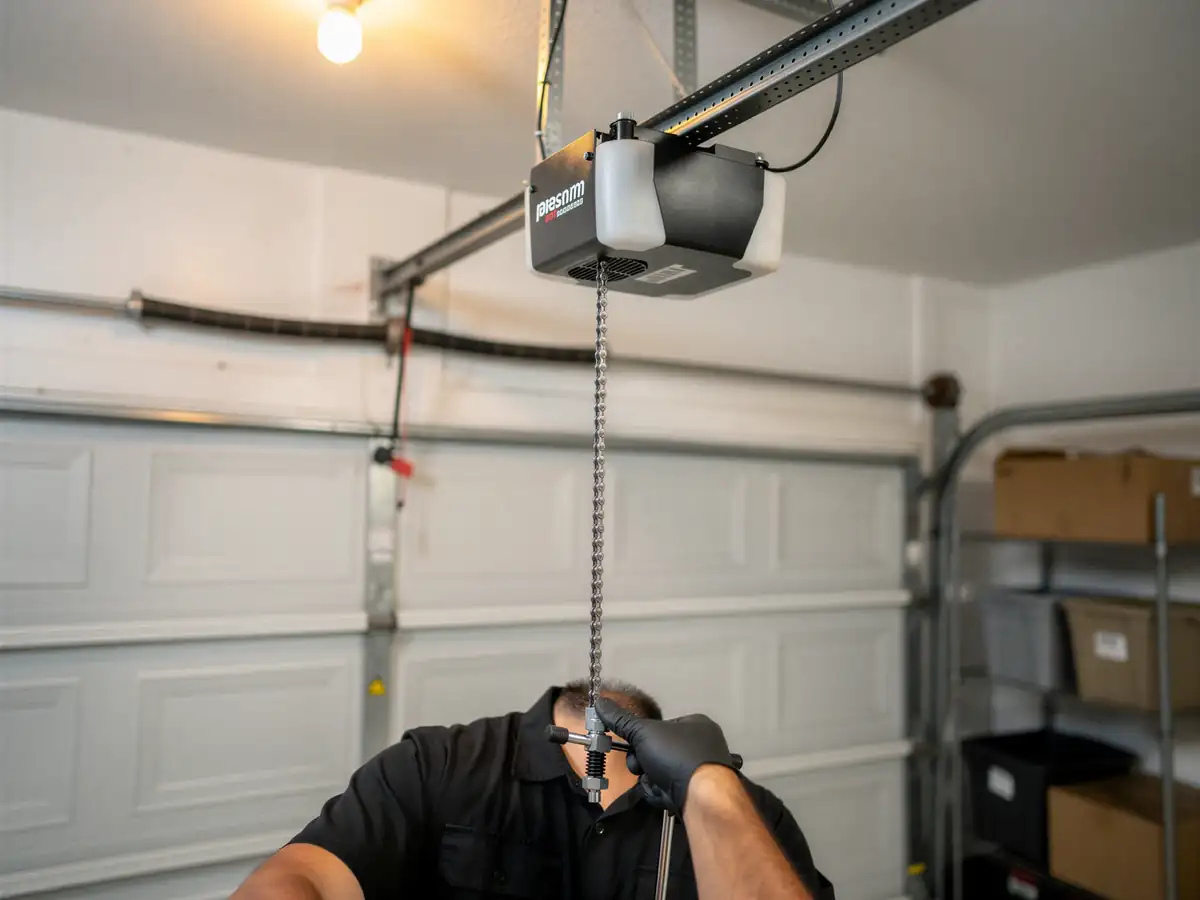
On a 1992-era door, the complaints tend to run the same handful of ways. The door shudders or jerks partway up - that's usually a spring that's lost tension unevenly, still turning but not doing its full share of the lift. A door that slams the last foot on the way down is often cables stretched past where the drum can take up the slack cleanly. Openers from this build year are frequently chain-drive units nearing or past their service life, and when one starts grinding or chattering on startup, it's rarely a quick fix - it's usually a sign the motor's bearings are done.
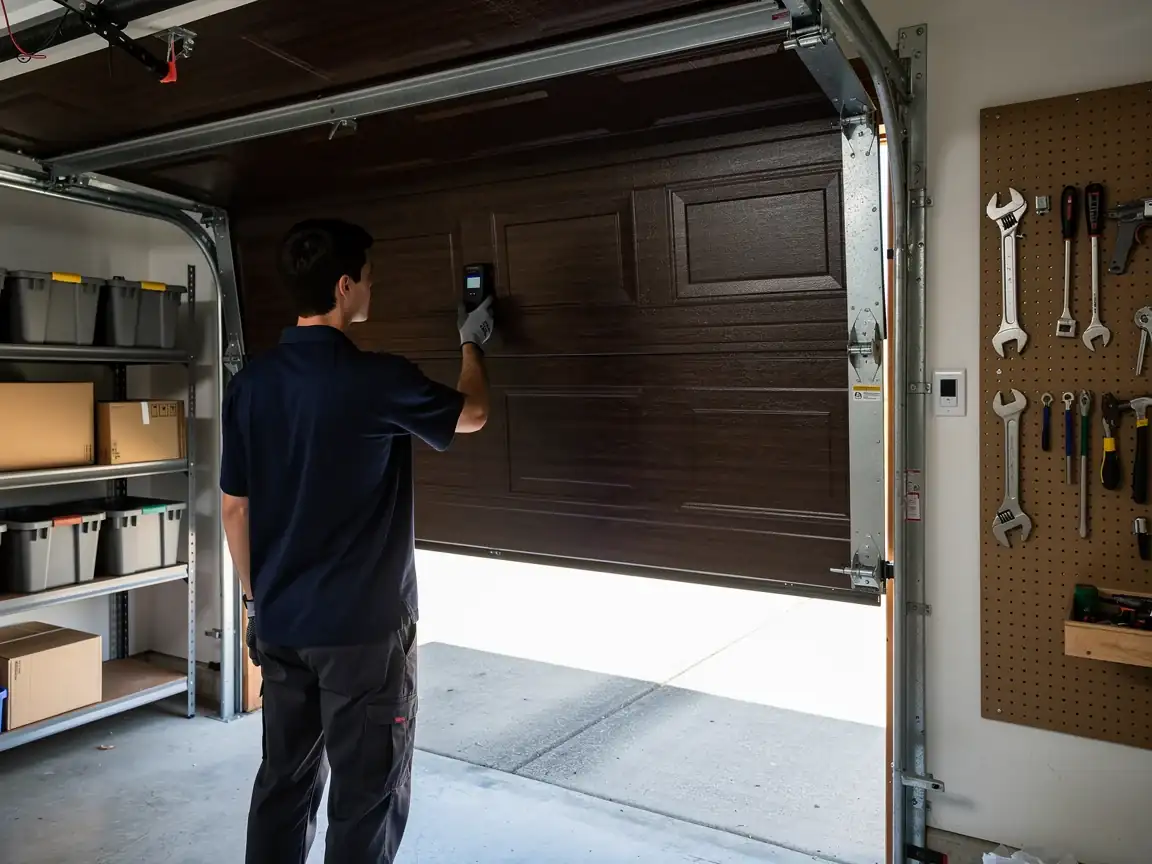
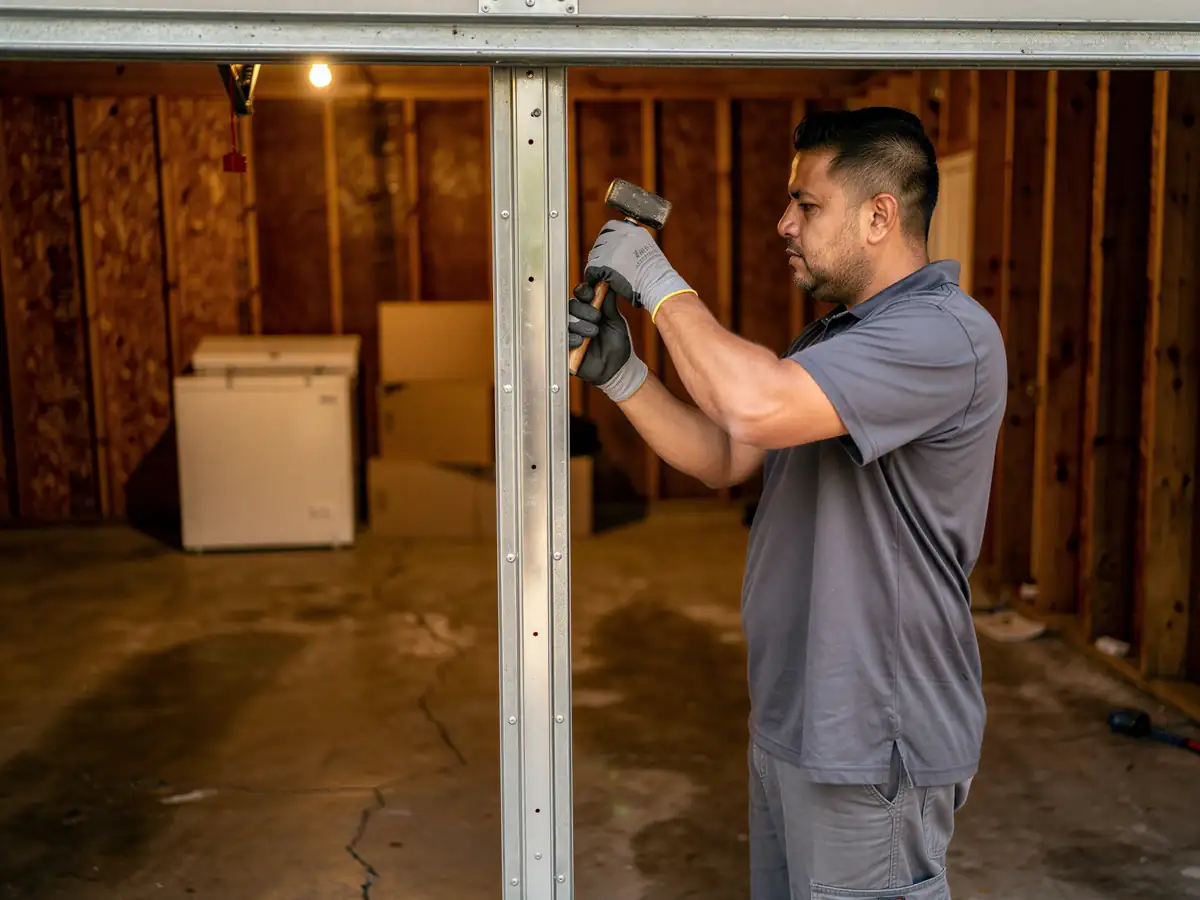
Track misalignment shows up as a door that rubs one side of the opening or drags at a specific point every cycle, in the same spot, which is different from a door that drags randomly and points instead to a bent section.
If your door is still on anything original from 1992, treat any new noise as information, not background noise - it's telling you which part is closest to done.
Can You Do This Yourself
Swapping an opener unit on an existing track is within reach for a homeowner comfortable with a ladder and a drill
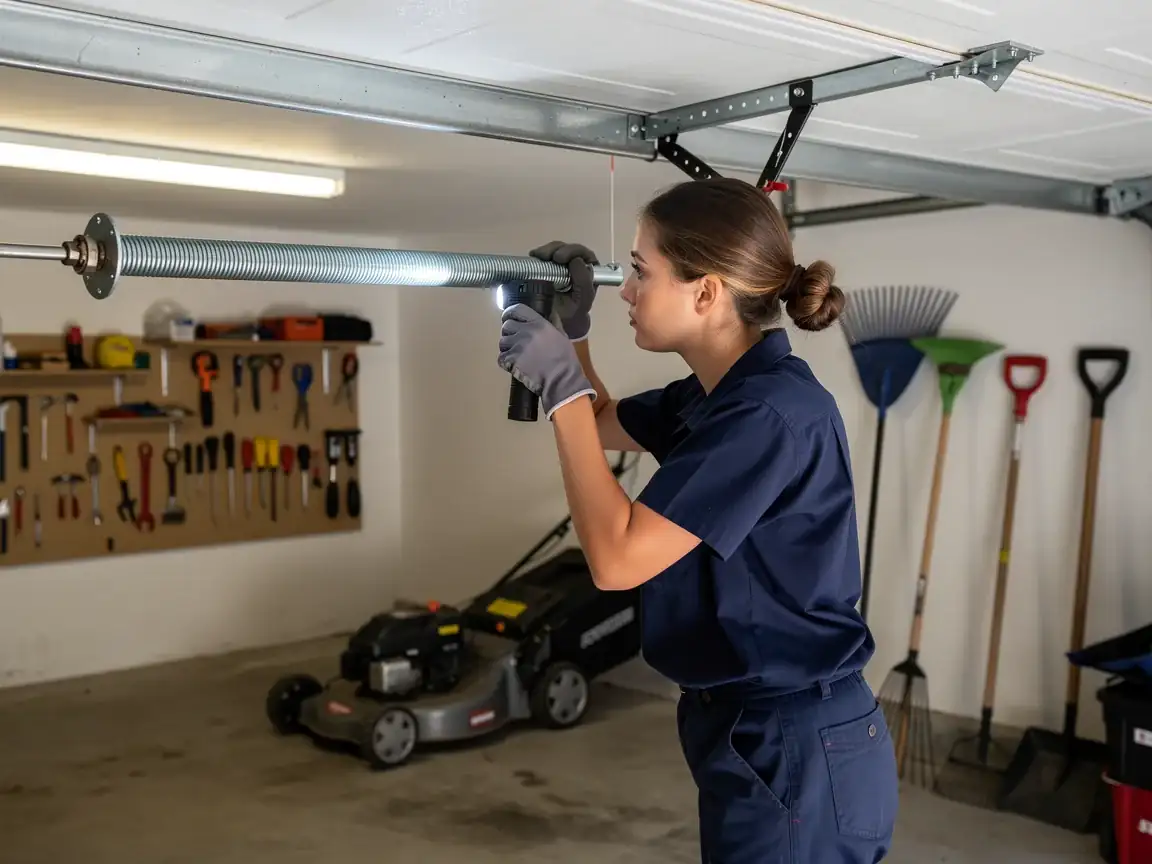
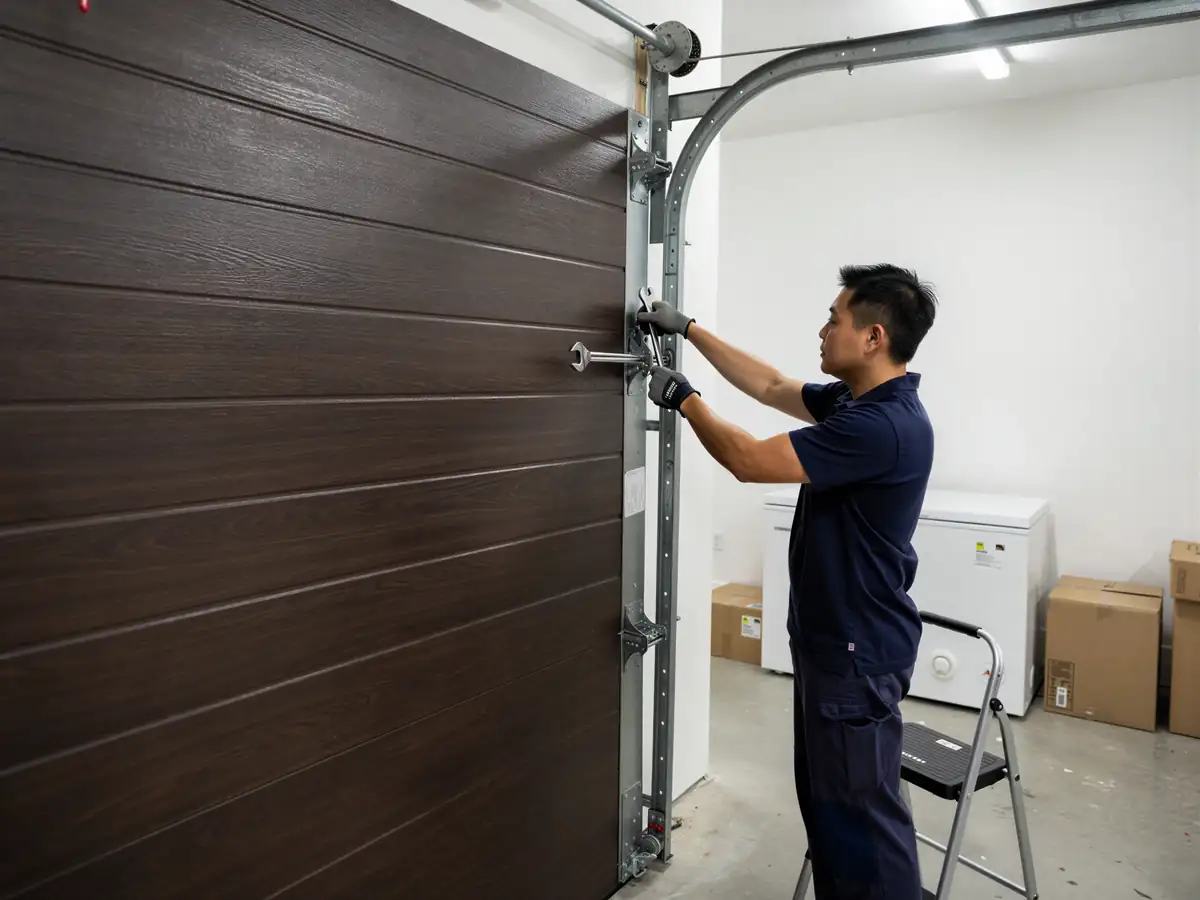
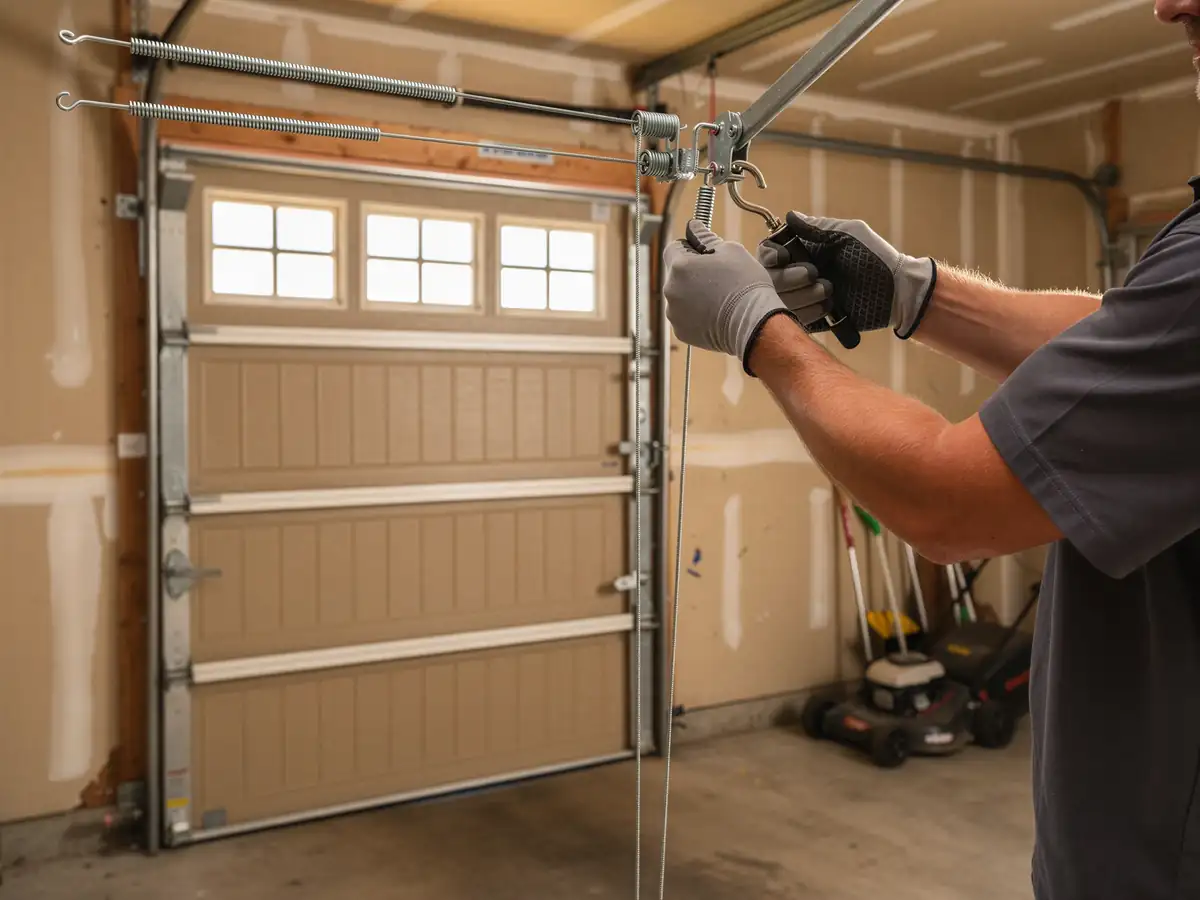
As long as the existing track and springs are sound. Installing a full new door - panels, new track, new springs set to the right tension for that door's weight - is not a weekend project, and torsion springs under tension are genuinely dangerous to work on without the right bars and experience. We'd rather tell you that plainly than have you find out the hard way.
Where we draw our own line
We don't do cosmetic touch-up work on panels that are still structurally fine, and we won't talk you into a full replacement if a spring and cable job will get another decade out of a door that's otherwise square and running true. On a house this age, sometimes the door's fine and it's just the hardware that's done.
How Long It Takes
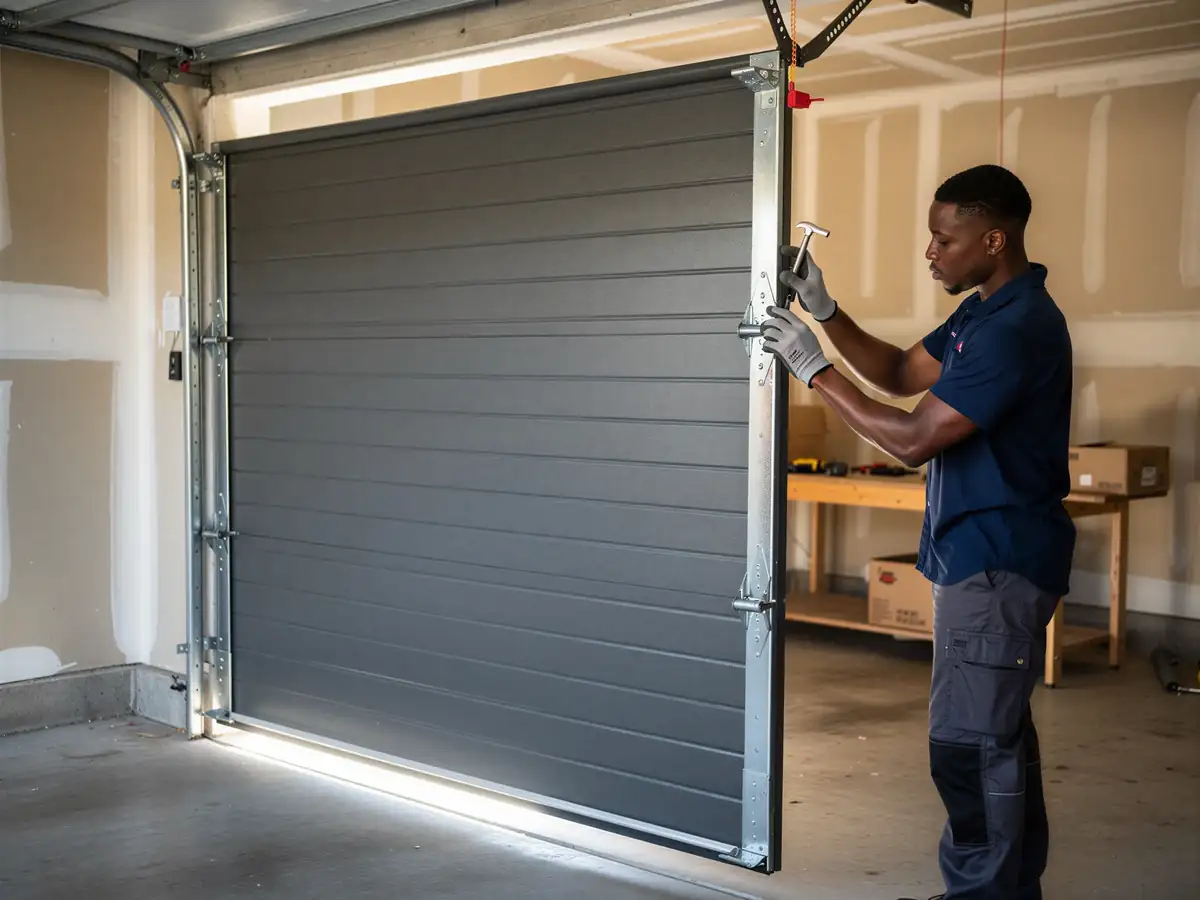
A straight installation on an opening that's already square - no header repair, no track rerouting - usually runs a half day once we're on site, including setup and tear-down of the old door. Add an opener swap and you're looking at closer to a full day. Jobs on original 1992-era framing sometimes turn up a header that's shifted slightly over three decades, which adds time we won't know about until the old door's off the hinges.
We come out from Owasso for the Justice trip, so scheduling factors into when we can get there, but once we're on site the work itself follows the same pace as any install - it's the door opening's condition, not the distance, that decides how long the job takes.
Parts We Carry
We stock standard torsion springs sized for common residential door weights, steel and insulated panel doors in the sizes that fit most garage openings from this build era, standard-drive and belt-drive openers, galvanized track sections, and cables and rollers. What we don't keep on hand is anything custom - a non-standard opening width, a specialty panel finish, or an opener model that's been discontinued for years. On a door that's original to 1992, the opener especially is often a model nobody stocks parts for anymore, which is frequently the deciding factor in replacing the whole unit rather than repairing it.
If your door or opener needs something outside what we carry on the truck, we'll tell you that up front rather than stall the job waiting on a part that may not show up.